Holiday Card Display

My small apartment just won’t allow a lot of holiday display. There’s no fireplace, no mantle, and not a lot of surface area that isn’t already buried in unopened mail.

2012-12 Christmas Card Ribbon 007  2012-12 Christmas Card Ribbon 015

So I’m pleased that I found a happy solution to showing off holiday cards (many of which have come from Brigit over the years–like the great fabric tree above). I bought a couple of yards of pretty ribbon, cut two slots inside each card with an X-acto, and threaded the ribbon through. Now the cards are hanging merrily along a doorway–festive but not cluttered. Also it’s my favorite type of project: low-skill, low-cost, and high in satisfaction. Merry Festivus, folks.

2012-12 Christmas Card Ribbon 021

Winter Matchbox House!

Get out your fine-point Sharpies! I made a new Winter Matchbox House for the holidays for those of you with both time and matches on your hands.

I couldn’t manage to take a decent photo of the downstairs with my new camera. I’m not blaming my new camera per se, but it’s the only new variable here. I’m just saying. If I manage to take some better photos, I’ll post them.

Lego Miniman!

Oh yeah, we did. We spent a Saturday making Lego miniman heads for our annual neighborhood Halloween party. Those are hours we will never retrieve.

But of course it was worth it. We bought concrete form tubes (also called Sonotubes) at the hardware store: 10″ diameter for larger grown-up noggins, 8″ inch diameter for kid craniums. We sawed the tube into individual helmets, then traced cardboard circles for the tops. We used sponge for the “connectors.” And spray-painted the whole deal bright Lego yellow.

We skipped the rest of the costume because, even though we made an effort, we weren’t going to go overboard on effort. (Here is a link to some folks who went above and beyond in making Lego costumes.) The Lego miniman smirk was the best part of the helmet, I think. The worst parts: no peripheral vision and gradual, but undeniable, aphyxiation. Happy Halloween!

First Quilt: Step 4

Brigit, I’m so glad you’re metaphorically holding my hand through this quilt project. Of course, I wish you were actually here because I’d find a way to get you to make the quilt for me. Ask any of my family members: I’m good at getting people to do stuff for me.

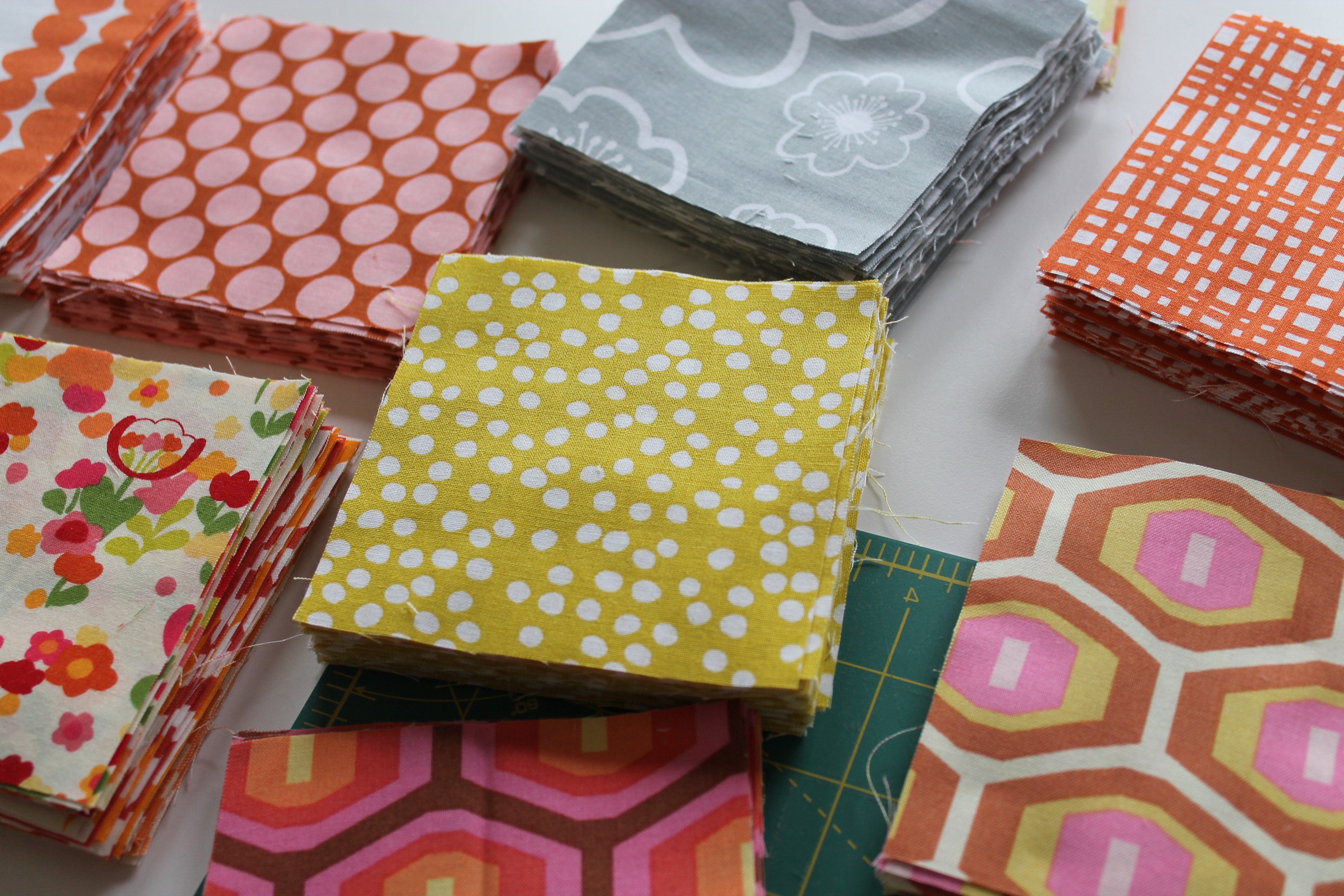
But I did the work myself and have crippling carpal tunnel to prove it. I cut out 728 4×4″ squares over the weekend. Before I began, I was beguiled by the the term “self-healing cutting mat” that’s mentioned in all of my quilting books. It sounds so New Age, right? But 728 squares later, my cutting mat is anything but healed. It is rather gouged, in fact. Apparently I don’t have a light touch with the rotary cutter.

Next purchase: Three hundred safety pins! My god.

Quilting backing how-to

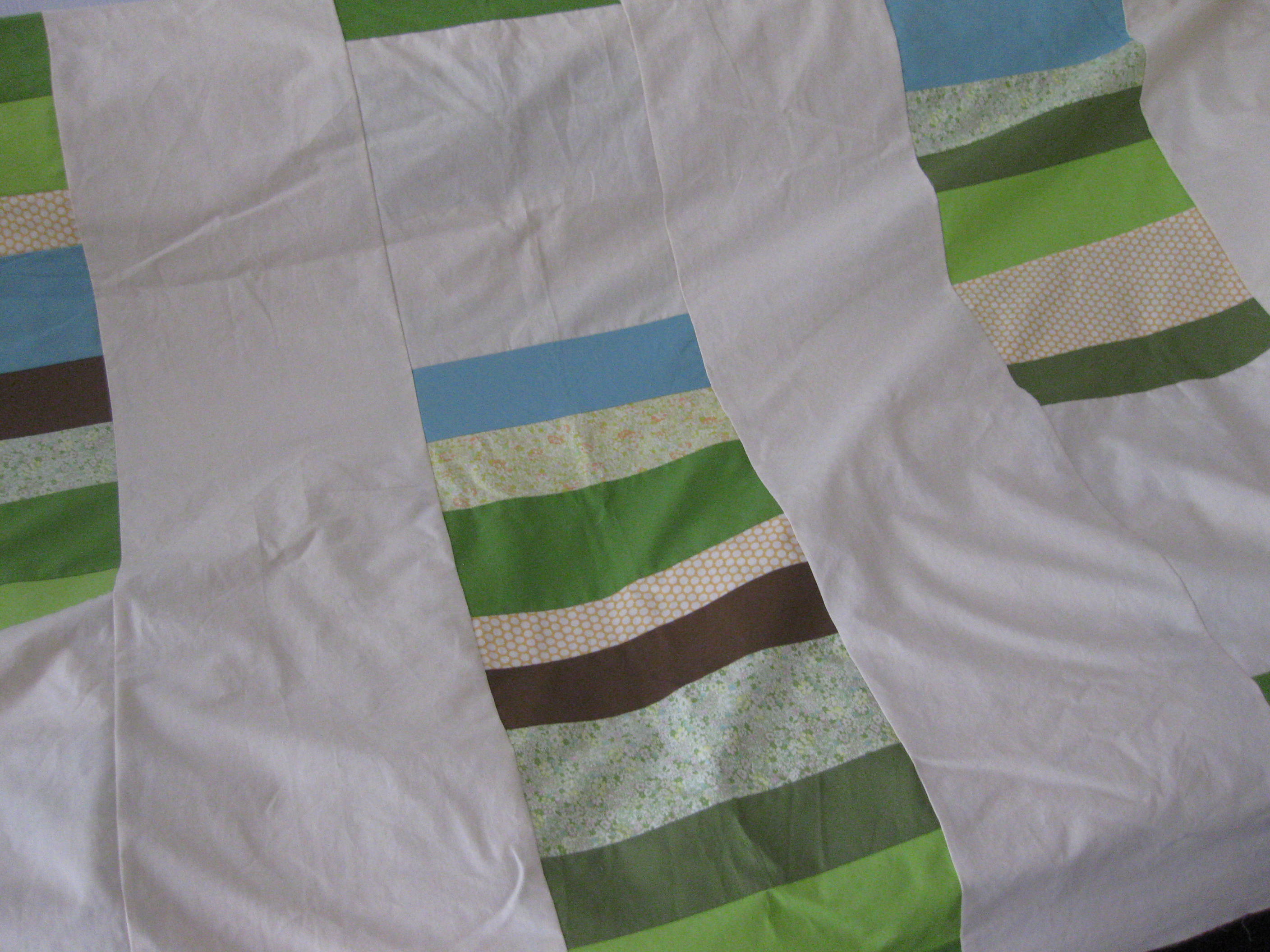
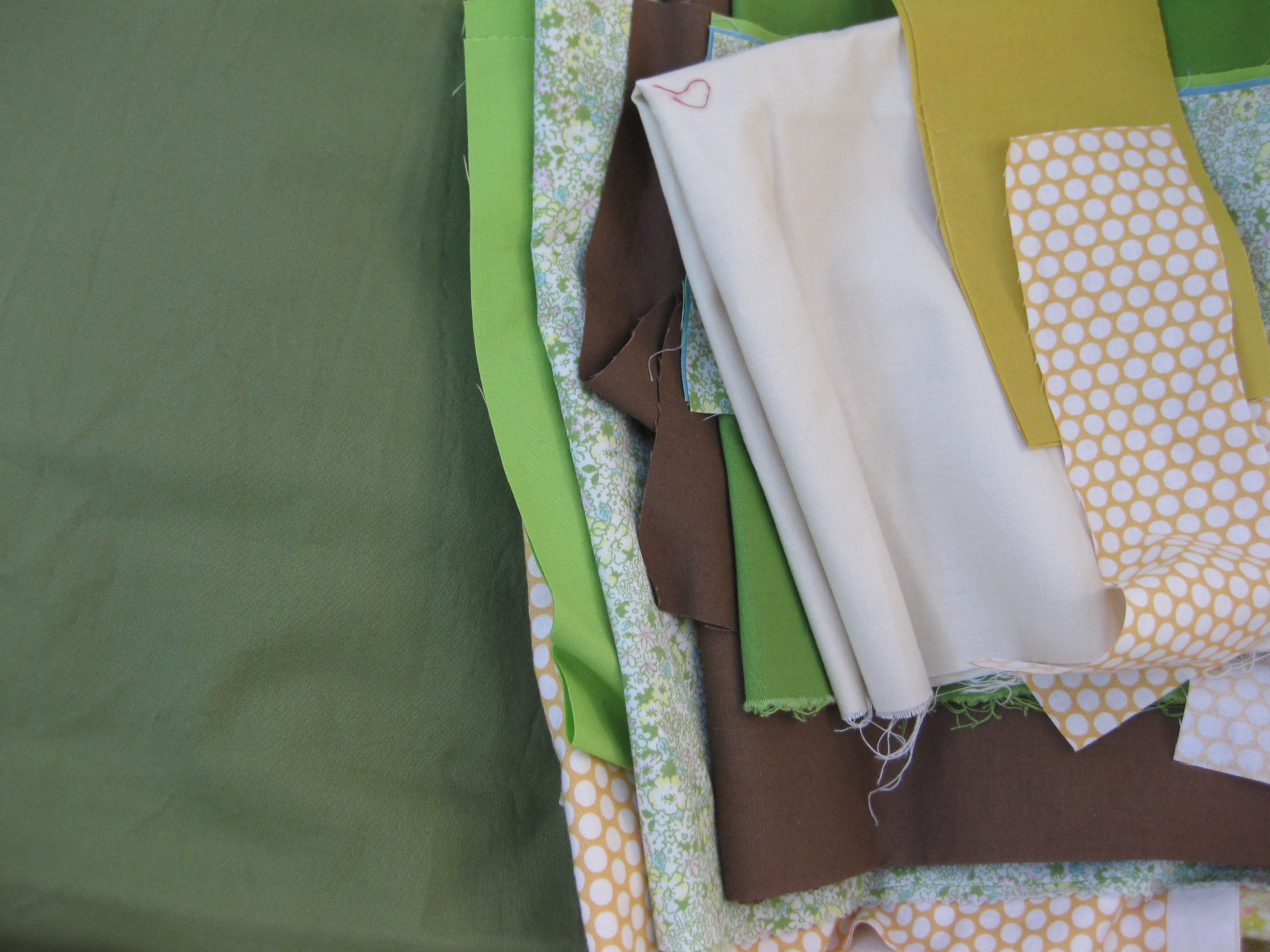
This quilt top started with some dainty floral fabric (Olympus Soleil) that went on sale, and the idea to make a picnic quilt. I used an easy stacked coin pattern and worked the florals in with mostly green solids. For the backing, I decided to use the same solid olive fabric that I plan to use for the binding. As often happens, I got around to making the quilt months after I bought the fabric. Since then, I’ve borrowed little bits and pieces from the yards of olive that I bought, so now I don’t have quite enough for the binding and backing. In come the scraps.
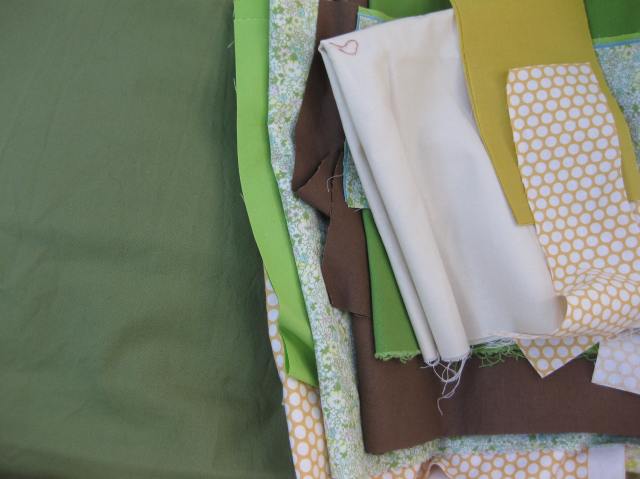
A quilt backing needs to be 3 inches bigger on all sides than the quilt top. My quilt will be 80 x 85″. Somehow I need to make an 86 x 91″ rectangle from 150 x 42″ of fabric for the backing. Backing should be made from large pieces of fabric so it isn’t too bulky with seams and doesn’t compete with the front. I will make four rectangles that are 37 x 42, and then make an 86 x 18 ” strip from the largest scraps to fill the gap in the length, I can put this strip at the top or in the middle (keeping in mind that three inches of the backing edges will be cut away when the quilt sandwich is complete). I’ll also need to add two inches to the width, and I think I’ll use one of the other solid greens from the front.

If you do have enough of one piece of fabric, then you just piece it together to make the size rectangle you need. Which, of course, is simpler and looks very elegant. Denyse Schmidt’s quilts often have nicely contrasting solids (and sometimes bold prints) for quilt backs that remind me of a pretty coat lining.