Quilt sandwich

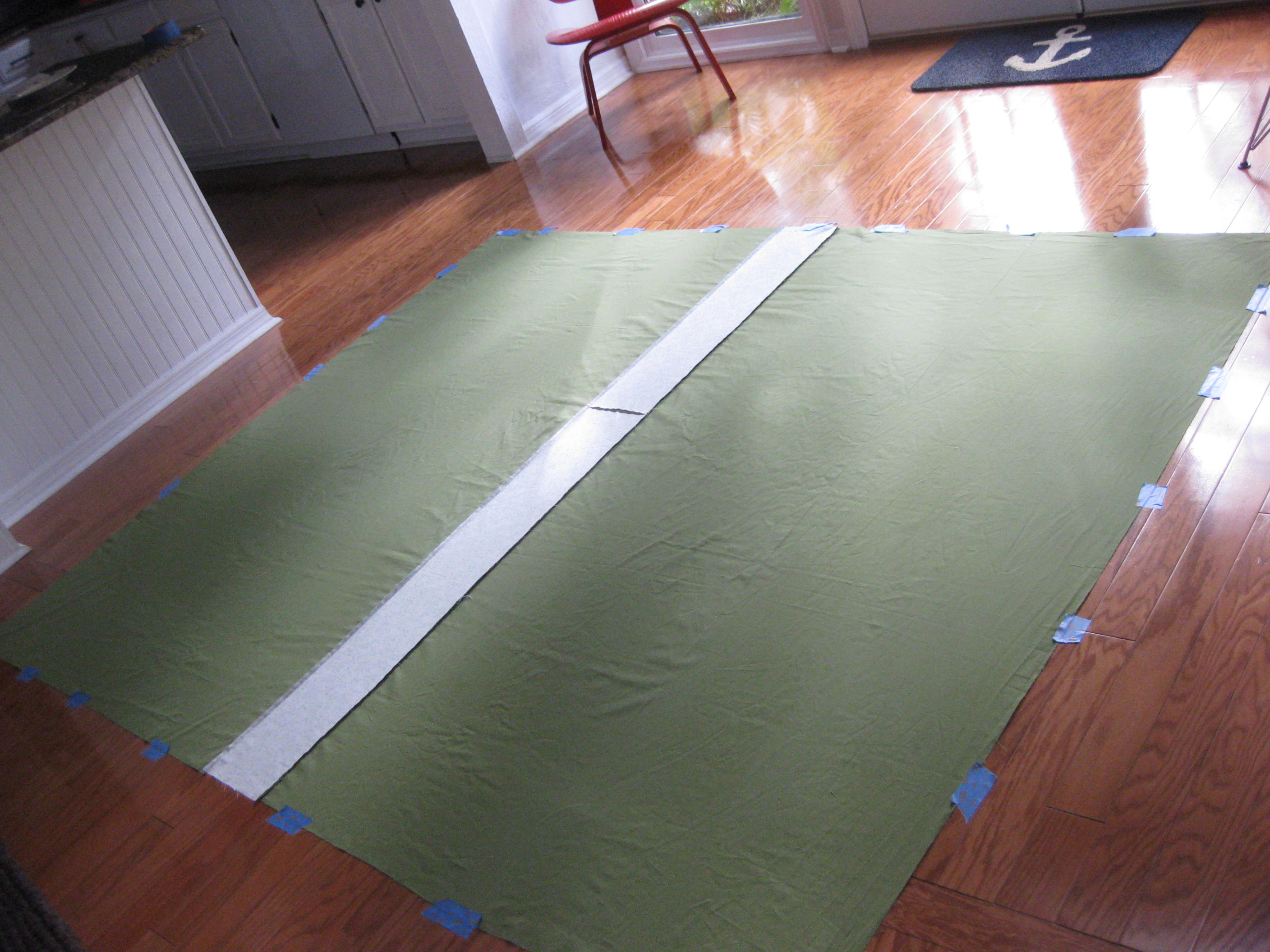
Here is a very quick tutorial about making a quilt sandwich–which can be super satisfying. First it is essential to clear a large space to spread out. Spread your quilt back, right side down, on the floor. Tape the edges (I use blue painter’s tape) to the floor so the fabric is smooth, but not taut. Pull off any stray threads.
IMG_1782

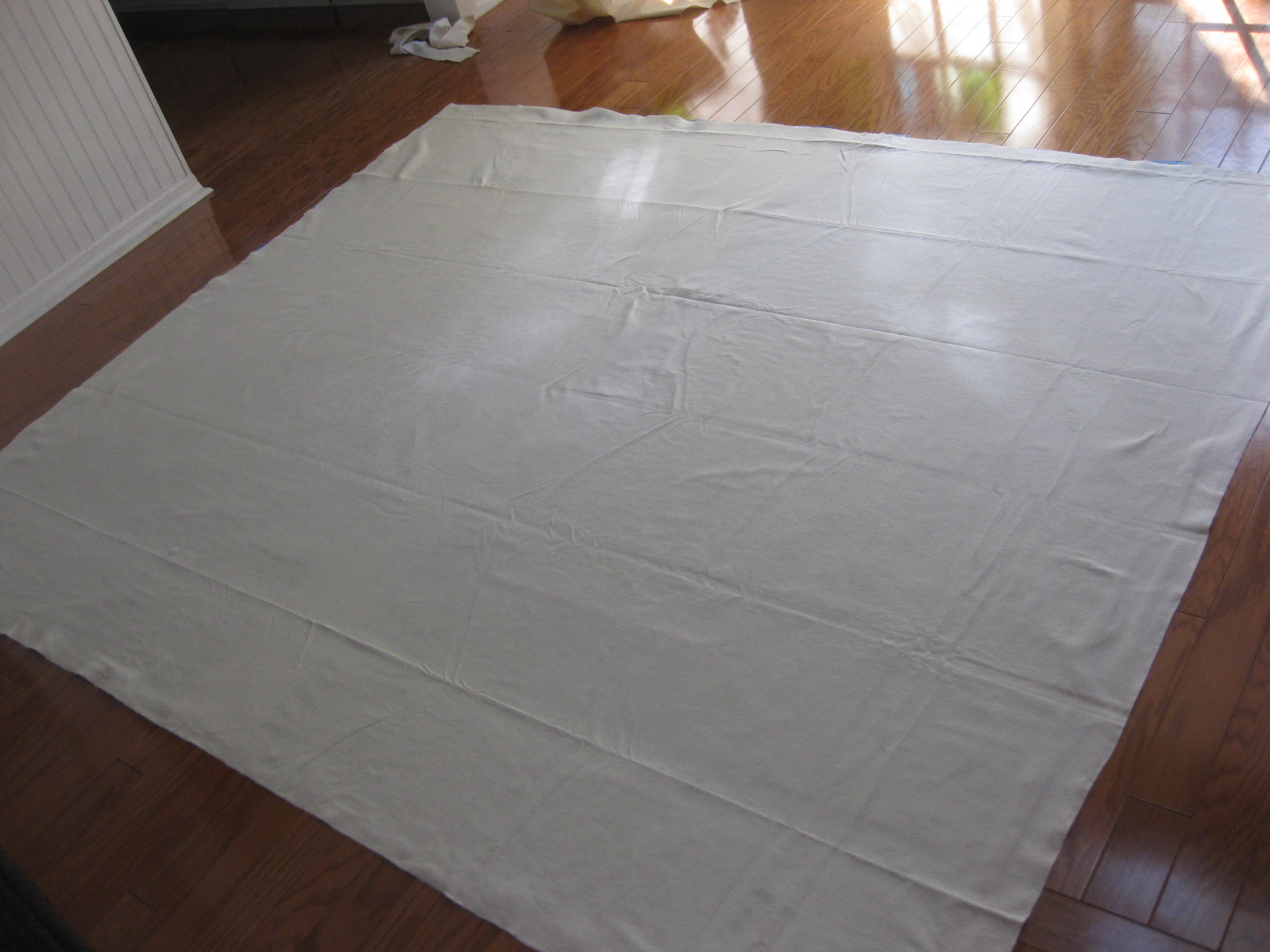
Next unfold your batting and, starting from the center, gently smooth out any wrinkles. The batting sticks to the fabric so you may need to lift the batting gently to smooth out some wrinkles. Once your batting is nice and smooth, trim any excess that extends beyond the edges of the backing.
IMG_1783

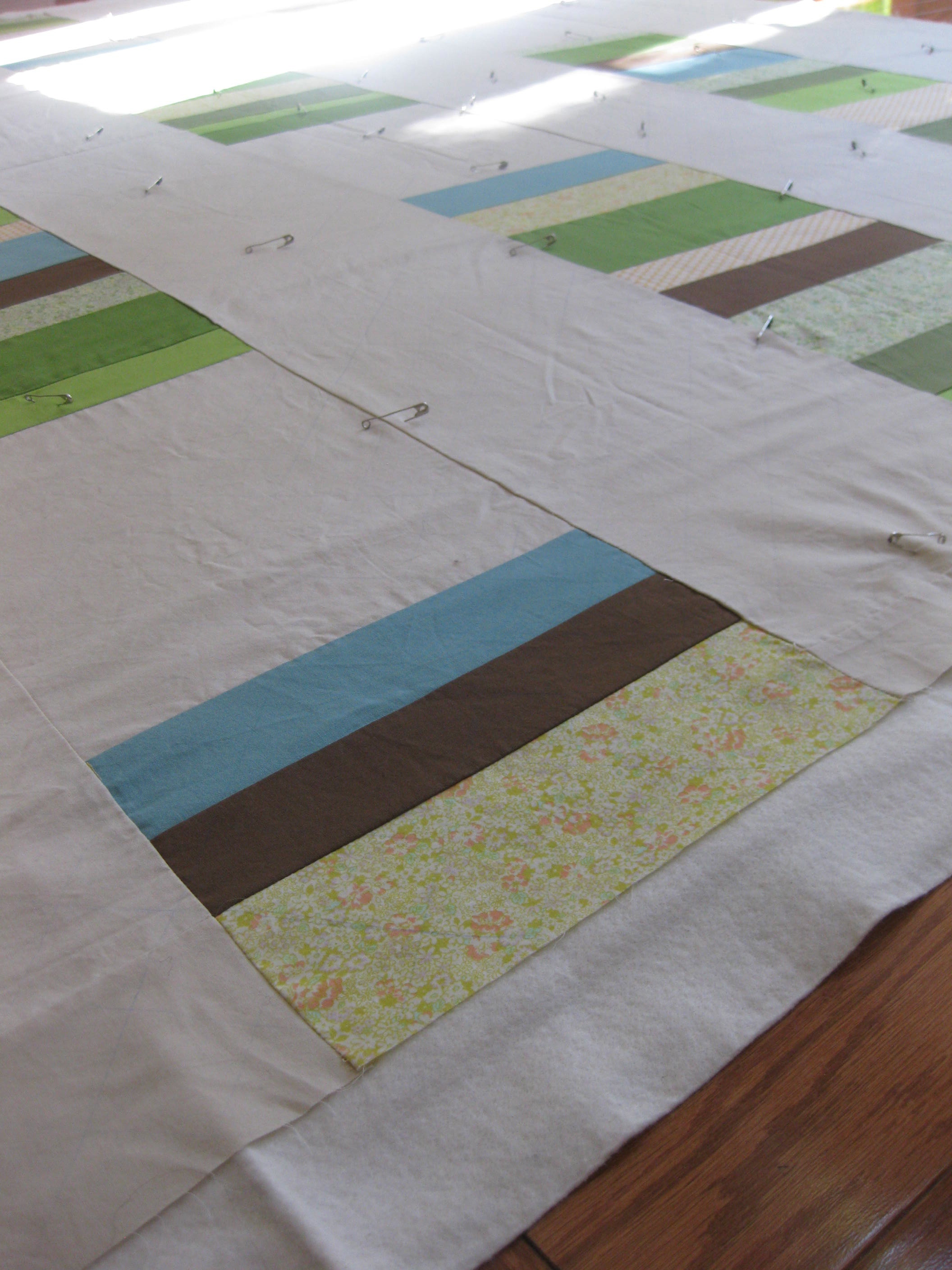
Then, lay your quilt top, right side up, on top of the batting. Your quilt top will be smaller than the backing and batting so you should be able to position it neatly. Again, starting in the center, smooth your quilt top onto the batting gently pushing any wrinkles to the edges. Finally, you can either baste or pin your sandwich together.  I prefer pins because I find pinning (with curved quilting safety pins) keeps my sandwich smooth. It is also faster than basting. Sometimes I baste the pinned quilt after I take it off the floor. The basting makes it easier when you are doing the quilting. Here is my quilt–all sandwiched together and ready to go.
IMG_1784

Tree topper

IMG_1768Until last year, we always traveled to Florida on Christmas Eve. Although we liked to fancy it festive to get up at the crack of dawn to zoom to JFK, jostle with fellow travelers laden with presents, and so on, it is infinitely better to spend Christmas in our own home. We can finally have a non-token Christmas tree–not only are we here to enjoy it but we can actually have a tree taller than a toddler. Resulting in a sudden need for ornaments. I’ve made some over the years and we bought some more, but we needed a tree topper extraordinaire. I made this star out of felt. I improvised the embroidery based on designs in the book Scandinavian Needlecraft. First I cut out two stars, embroidered the design on one side, then blanket stitched the two stars together. I left the side of one point open and used a chopstick to push stuffing into the points. Then I stitched a loop of ribbon into the open space before blanket stitching the star closed.  Here it is atop our tall tree!

IMG_1770

First Quilt: Step 4

Brigit, I’m so glad you’re metaphorically holding my hand through this quilt project. Of course, I wish you were actually here because I’d find a way to get you to make the quilt for me. Ask any of my family members: I’m good at getting people to do stuff for me.

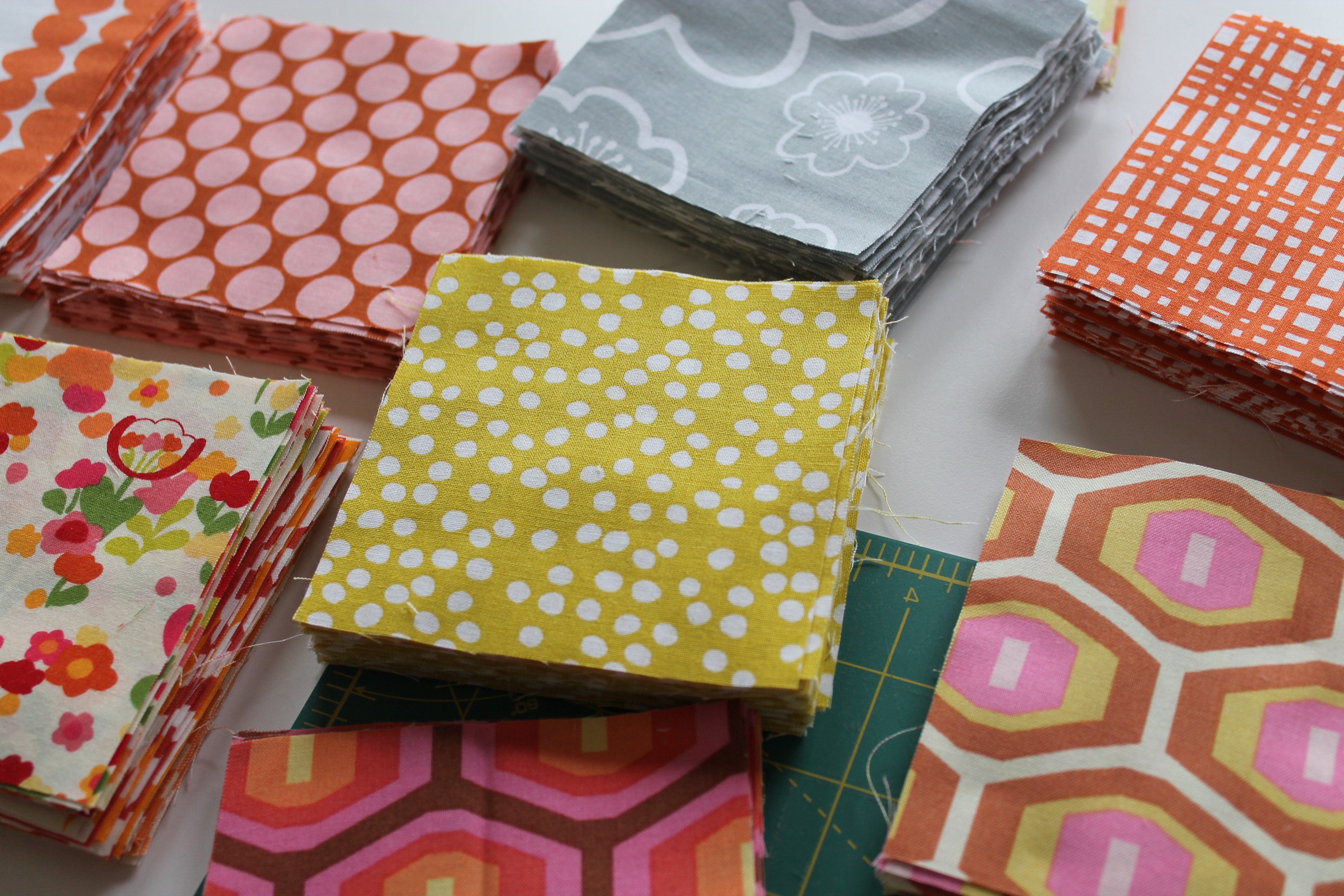
But I did the work myself and have crippling carpal tunnel to prove it. I cut out 728 4×4″ squares over the weekend. Before I began, I was beguiled by the the term “self-healing cutting mat” that’s mentioned in all of my quilting books. It sounds so New Age, right? But 728 squares later, my cutting mat is anything but healed. It is rather gouged, in fact. Apparently I don’t have a light touch with the rotary cutter.

Next purchase: Three hundred safety pins! My god.

Quilting backing how-to

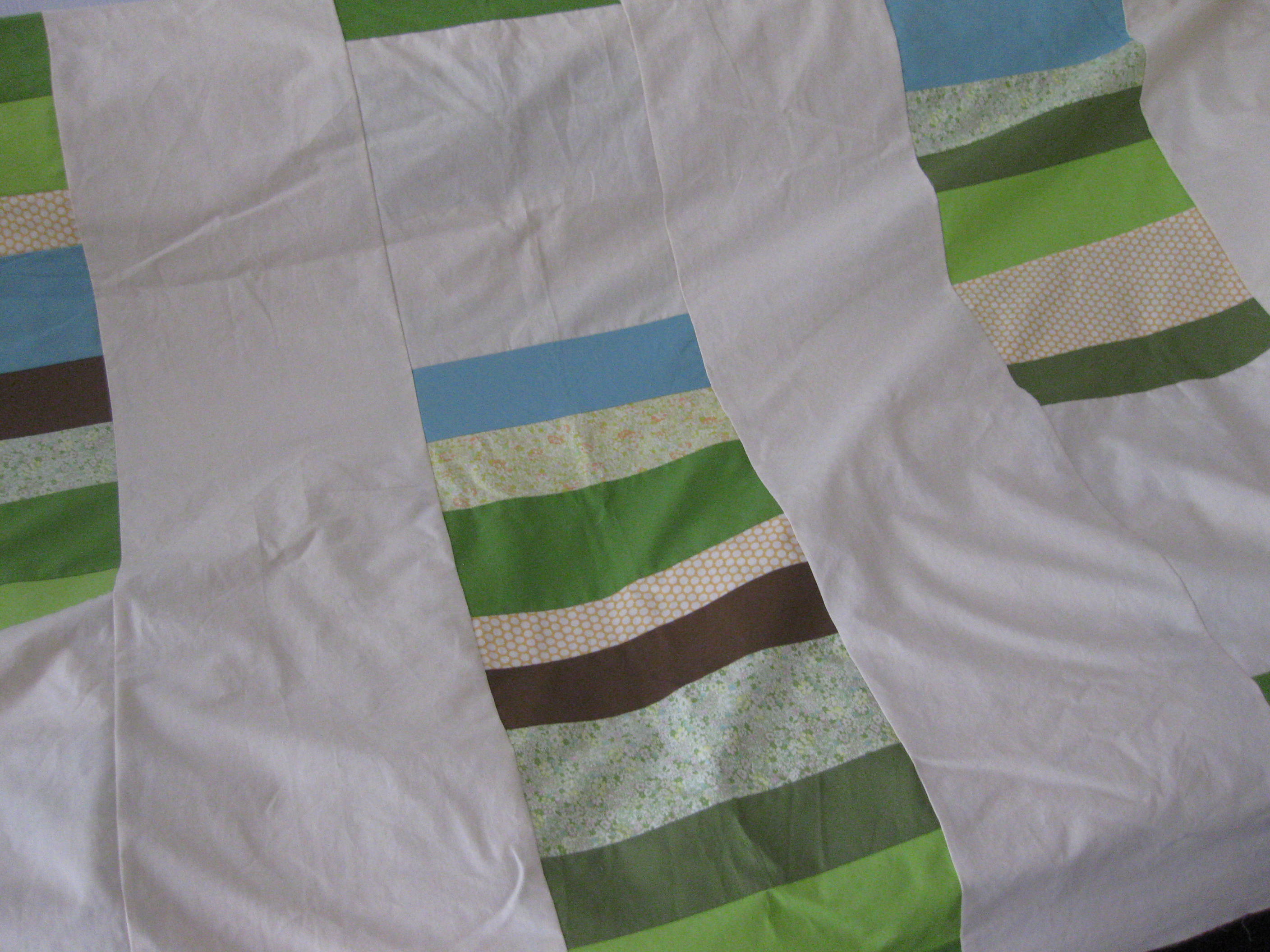
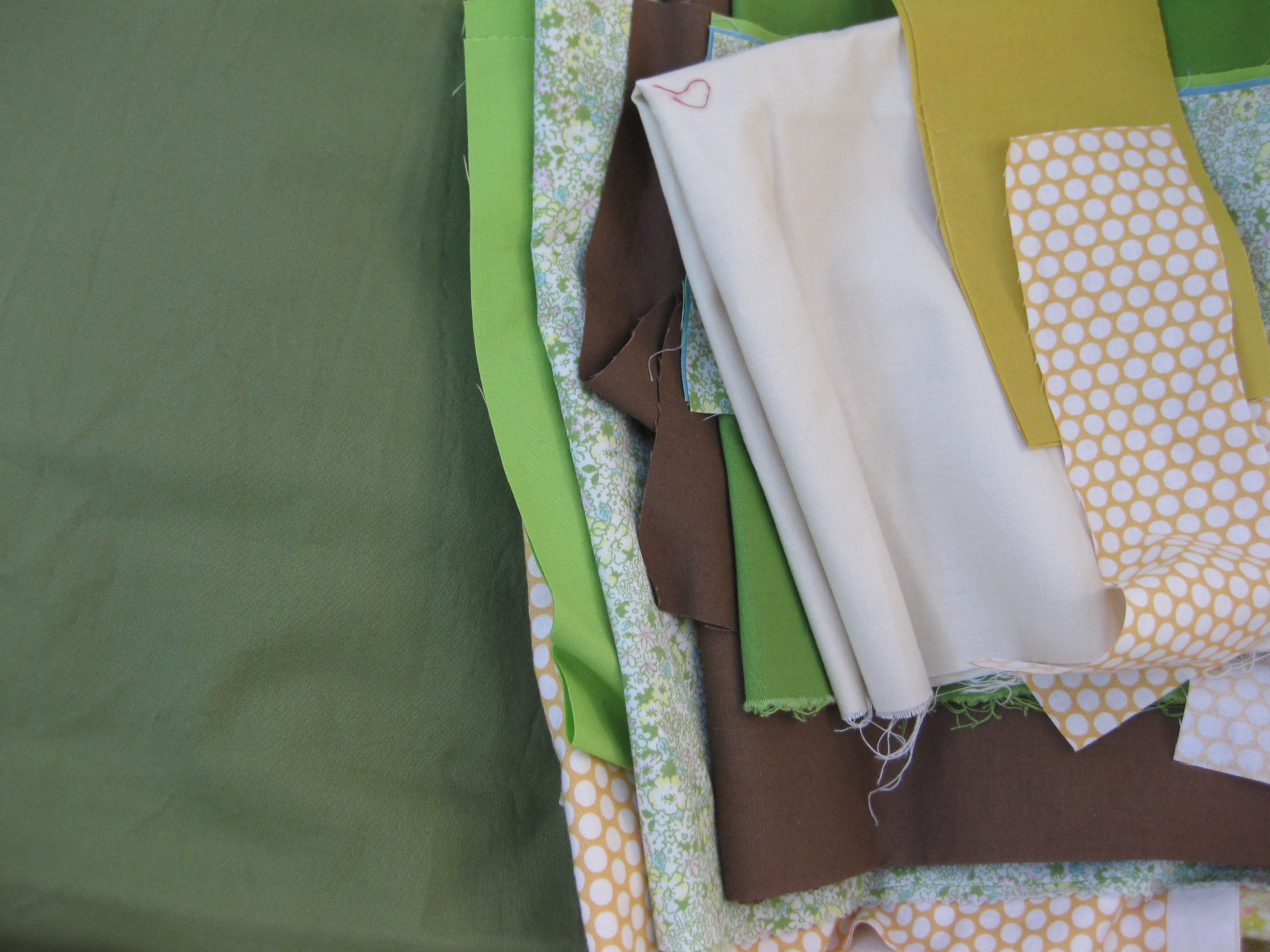
This quilt top started with some dainty floral fabric (Olympus Soleil) that went on sale, and the idea to make a picnic quilt. I used an easy stacked coin pattern and worked the florals in with mostly green solids. For the backing, I decided to use the same solid olive fabric that I plan to use for the binding. As often happens, I got around to making the quilt months after I bought the fabric. Since then, I’ve borrowed little bits and pieces from the yards of olive that I bought, so now I don’t have quite enough for the binding and backing. In come the scraps.

A quilt backing needs to be 3 inches bigger on all sides than the quilt top. My quilt will be 80 x 85″. Somehow I need to make an 86 x 91″ rectangle from 150 x 42″ of fabric for the backing. Backing should be made from large pieces of fabric so it isn’t too bulky with seams and doesn’t compete with the front. I will make four rectangles that are 37 x 42, and then make an 86 x 18 ” strip from the largest scraps to fill the gap in the length, I can put this strip at the top or in the middle (keeping in mind that three inches of the backing edges will be cut away when the quilt sandwich is complete). I’ll also need to add two inches to the width, and I think I’ll use one of the other solid greens from the front.

If you do have enough of one piece of fabric, then you just piece it together to make the size rectangle you need. Which, of course, is simpler and looks very elegant. Denyse Schmidt’s quilts often have nicely contrasting solids (and sometimes bold prints) for quilt backs that remind me of a pretty coat lining.

Quilt Colors! (Step 2)

A month or so ago I resolved to make my first quilt–something that still seems like a sin of hubris. The Audacity of Quilting! So here I am, taking my second, wobbly step. I have a pattern (the Ollalieberry Ice Cream Quilt by Alicia Paulson of Posie Gets Cozy). To avoid the real next step (fabric selection), I sneaked in a half-step: palette!

For a long time, I’ve loved the colors of Ray Eames‘s Crosspatch fabric design (this is a sketch of it, from 1947). The fabric lends itself to quilt inspiration: all those little squares.

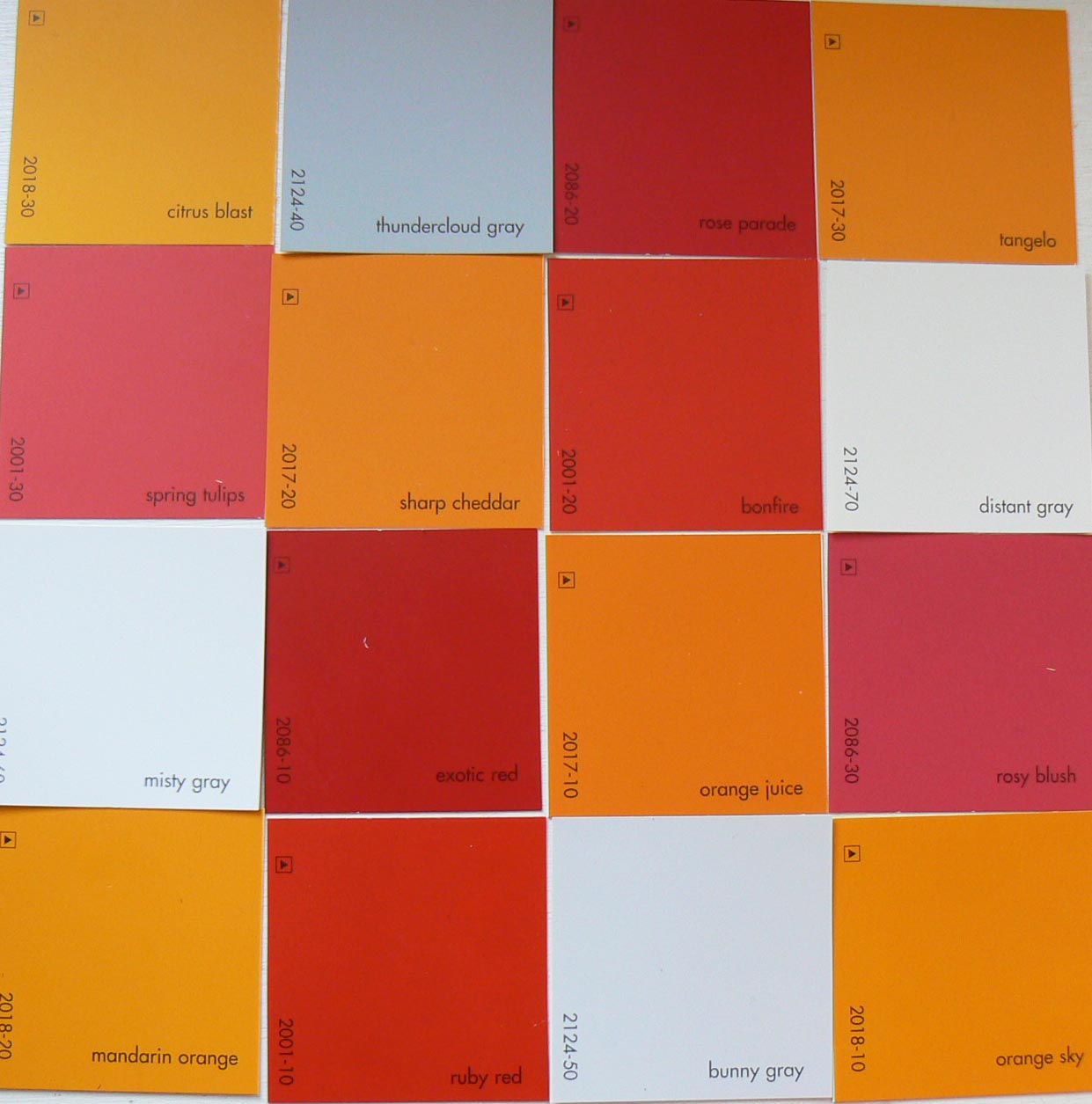
Inspired by Brigit’s origami paper sketches, I cut out squares of Benjamin Moore paint chips and played around. Very satisfying–I highly recommend paint chip collage. If only quilting were that easy . . .

The quilt calls for a mix of patterns and one solid, so this is a generalized color scheme not an actual one. I think I’d like the solid to be pale gray and the patterns to be pink/red/orange. Brigit, what do you think? Should I stick with white as the solid? I like all the pretty flower prints that Alicia uses in her quilt but know they wouldn’t fit into my house–so I’m guessing I’ll end up with brighter, geometric patterns.

Next step: fabric store.