House: DIY namesake pillow

IMG_0527

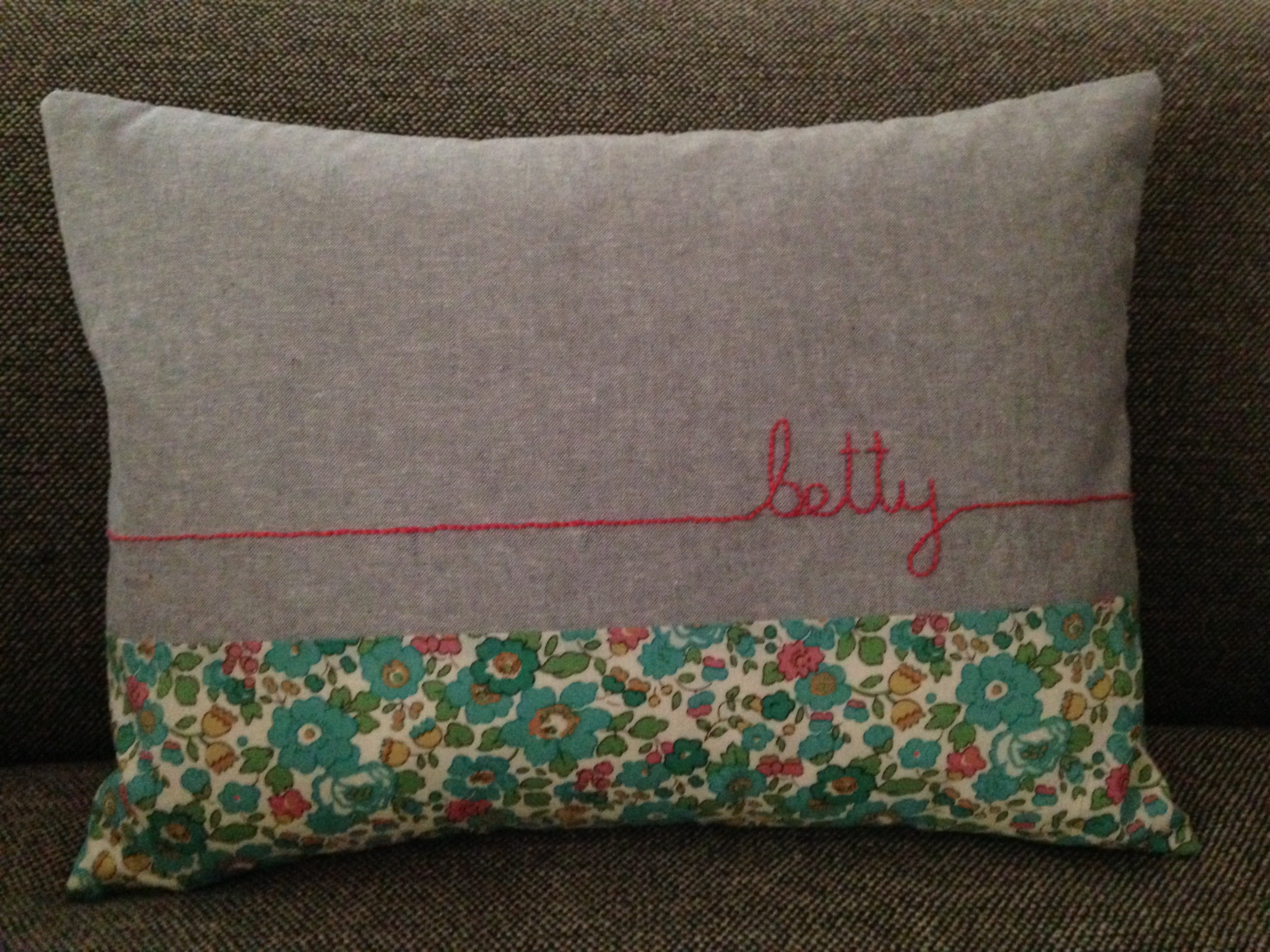
My daughter has a common/uncommon name and it’s a rare day when her name appears on any souvenirs worth bringing home. A Betty spoon rest is pretty easy to find, but anything an eleven-year-old would actually want not so much. So while she was away at camp (a.k.a. the greatest place on earth) I made her this little pillow for her newly designed bedroom. I followed the cottage magpie tutorial that I use for all my cushions. This pillow is a “small boudoir” (oh la la) size (12×16 “). Here are the steps to make your own namesake pillow.

Materials: About half a yard of main fabric (I used yarn dyed Essex) and a small piece of a printed fabric. About half a yard of unbleached muslin. Embroidery thread. Pillow insert. Fun button.

1. Front panel. Cut one piece of the printed fabric 17 x 5.5″ and one piece of your main fabric 17 x 8.5″. Sew the two pieces together along the long edge using a quarter inch seam. Press the seam toward your main fabric.

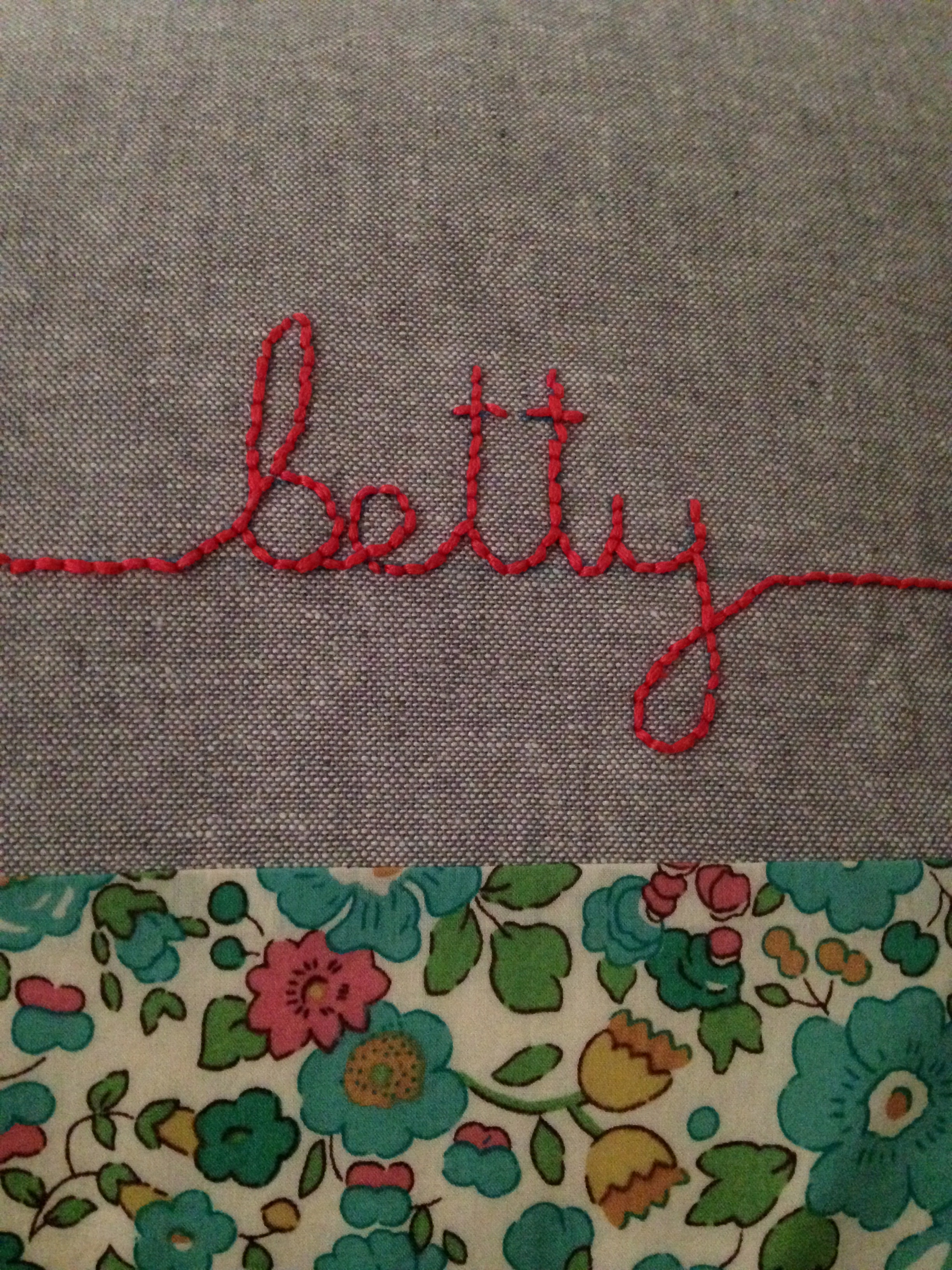
2. Use a washable marker to draw your design. I made a straight line one inch above the seam and then scripted betty on the line about two-thirds along the line.

3. Embroider the design using a back stitch.

4. Cut your muslin lining and back panels. Cut the front muslin lining 13 x 17″. Cut two pieces of your main fabric 11 x 13″ and two muslin pieces of the same measure.

5. Place your back panel and lining right sides together and stitch along the 13″ edge using a half inch seam. Turn right side out and press the seam. Pin then tack around the three other sides. Tacking the lining to the fabric makes assembling the cushion much easier.

6. Make a button hole in the center of one back panel half an inch below the seam.

7. Pin then tack the muslin to the main panel (wrong sides together)  one quarter inch from the edge.

8. Next put your pieces together as follows: Front panel right side up; back panel with buttonhole wrong side up; back panel without buttonhole wrong side up, overlapping the other back panel .

9. Align all the edges, pin, and stitch together using a half inch seam.

10. Trim the corners then over stitch around the edge to prevent fraying.

11. Turn the pillow cover right side out and poke out the corners.

12. Sew on your button and put the insert inside the cover.

13. Step back and enjoy your handiwork.
IMG_0524

Creative Kid: DIY Tie Dye


It was cousins’ craft weekend at the lake cottage–a well-timed event considering that it rained (monsooned) half of the time. When the cousins weren’t performing as members of the Awful Music Band (really, truly awful), we were painting, sculpting clay, printmaking, and getting our hands stained if not dirty with a tie-dye extravaganza. If you’re interested in making tie-dye a summer tradition too, here is my unofficial guide, with kid-friendly steps starred.

DIY Tie-Dye

1. Buy a 3-color tie dye kit. I usually use the Jacquard Funky Groovy Tie Dye kit, which includes everything you need: the dye already in squirt bottles, rubber gloves, rubber bands, soda ash, and good instructions. Have extra dishwashing gloves and rubber bands on hand. This kit makes about 5 t-shirts.

2. Collect white cotton clothing. If it’s new, make sure to pre-wash. Don’t forget to tie-dye some socks–always a crowd pleaser!

2. Set up an outside work space and cover it in plastic.

*3. Create your design by folding and using rubber bands. Stripe designs, sunbursts, and traditional circles are simple enough for kids to make. Several easy patterns are included in your dye kit. It’s okay to improvise, too!

4. Soak t-shirts in soda ash for recommended amount of time. This enhances the dye’s vibrancy.

*4. Apply dye with squirt bottles. Kids should wear aprons/old shirts and rubber gloves. Remember that yellow + blue = green. Red + blue = violet. Yellow + red = orange. Keep clear of combos that make brown! Brown is not a groovy tie-dye color.

5. Place dyed shirts in plastic bags and let them sit overnight. The next day, rinse very well (I use an outdoor hose and bucket) and then throw them in the washing machine.


House: Painted Adirondack Chairs!

Does the chair mirror the sky, or the other way around? Either way, Benjamin Moore’s Blue Lapis is a delicious, summer hue. According to the company’s website, it’s the color “favored by Cleopatra.” Have I mentioned that I’d love a career as a color copywriter?

I painted two unfinished Adirondacks in blue lapis to add to our chair collection up at the lake. The others are painted in Orange Juice, Tequila Lime and Pink Raspberry. (We weren’t aiming for subtle.) After priming, I used less than a quart (plenty for two chairs) of exterior latex paint in semi-gloss.  And then I painted a matching tiny version (photo on upper left) that I found at my craft store!

Renew: Doll Chair

Many of my teenage summer jobs involved painting. (Of walls and houses, that is. Not of high art.) Maybe that’s why my summer cravings include not just ice cream cones, lake swims, and hammock reading, but also splashing paint about. If you have the patience, painting is such a gratifying, economical way to transform something worn and tired.

doll chair

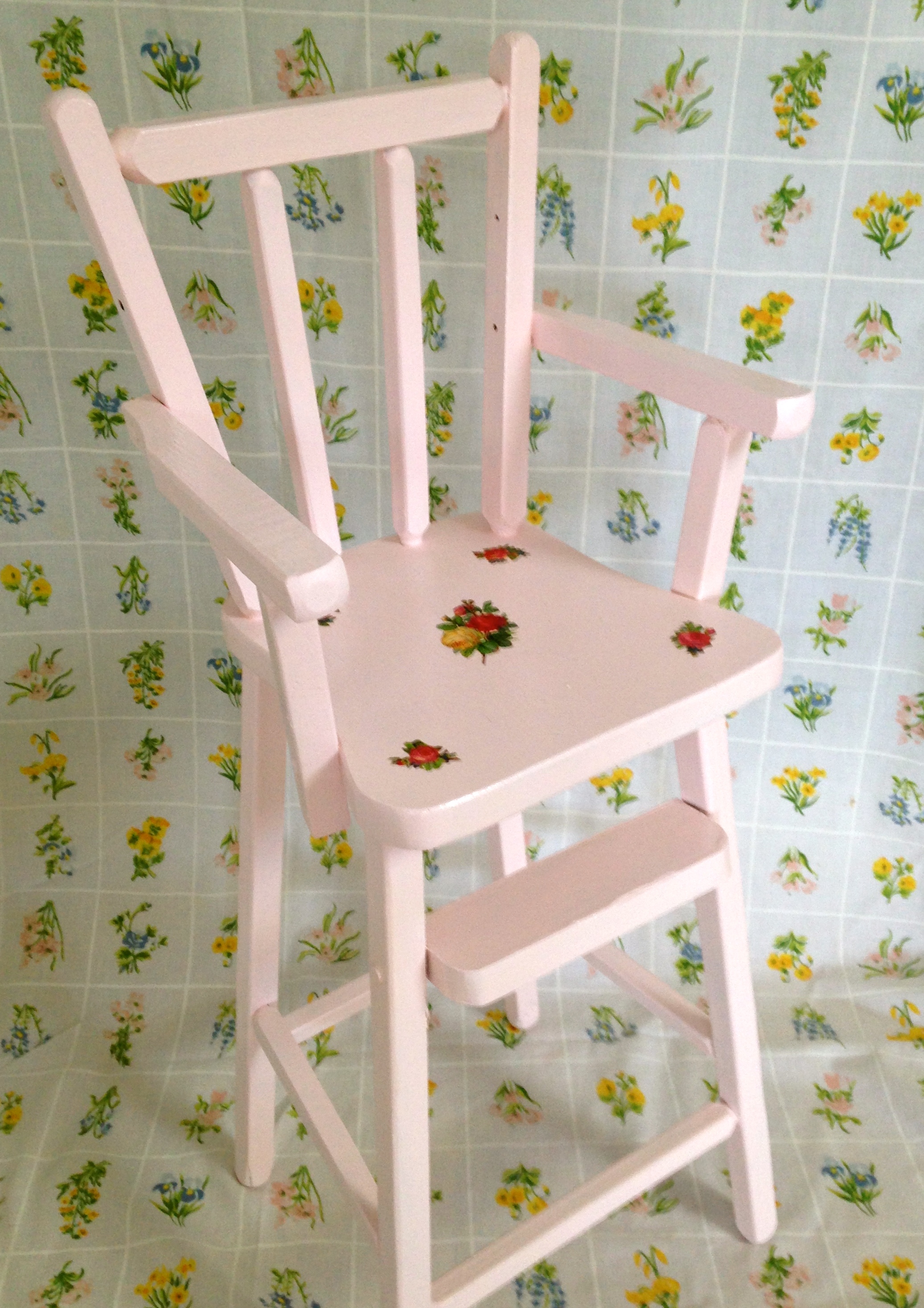
I purchased this doll chair at a yard sale years ago, and it’s been moldering in my basement ever since. Now it has the perfect recipient–my niece Lila who has recently become besotted with a doll she named Rosie. (Feminists out there: no worries, Lila is formidable and will some day rule the world.)

I had some leftover pink paint (Ben Moore Elephant Pink) from my stair project and ombre porch swing project. After a coat of this pale pink, I cut out some Victorian roses (I’m sorry! I had to!) for decoupage. I wish I had taken a before shot–the chair was formerly dirt brown!

Tried it: Matchbox Weaving

matchbox weave by homemade city

Some of you may who follow this blog know about my love for all things matchbox. In addition to tiny crafts, I’m also drawn to pointless ones. So when I spotted this matchbox weaving by Marisa Ramirez on Pinterest, of course, I had to try it. I thought it might be fun to do this with kids, but my 8-year-old son Zeke informed me it would too hard. I think he’s right, but maybe we could weave some other unlikely object, like these sticks?