Matchbox Chest of Drawers

We’re not pyromaniacs, really. But we do manage to go through matches at an alarming rate. And I always squirrel away the matchboxes–like clementine crates, I find them impossible to toss. So I guess that makes me a pyromaniac and a hoarder.

After I wrote about dollhouse love last month, I remembered making this matchbox chest of drawers as a kid. For those of you who share my affection for little things, this Lilliputian project is fun & quick. I used 4 matchboxes, a piece of polka-dot card stock, and those doodads (not brads–snaps?–but brads would do the trick). Here is a downloadable pdf with step-by-step instructions for making your own mini dresser.

I also admired this groovy homemade dollhouse in the April issue of Family Fun magazine (“House & Carton” by Amy Brown). This Family Fun link shows you how to make your own (from two cardboard boxes) complete with the fancy furnishings (all fashioned from egg cartons).

House & Carton

(Photo by Andrew Greto; ideas and craft stylings by Lynn Zimmerman. Reprinted with permission of Disney FamilyFun. Copyright April 2011.)

And while I’m on the topic of the miniature (I know, I know–again!) . . . I thought I’d mention the three-book series, Doll People, by Ann M. Martin and Laura Godwin, with exceptional black-and-white illustrations by Brian Selznick (including a cut-away of an antique dollhouse).
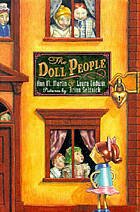
Yes, the doll people are alive & there’s a creepy baby doll in one of the stories–but the books are gentle and true to a kid’s perspective. They are emphatically not Toy Story. Toy Story 3, with its hints of torture and apocalypse, left my 5-year-old weeping in the theater aisle. And me, too, for that matter. But Zeke & I just finished these books & we loved them.
Freezer Paper Stencils: VW Bus Pillowcases

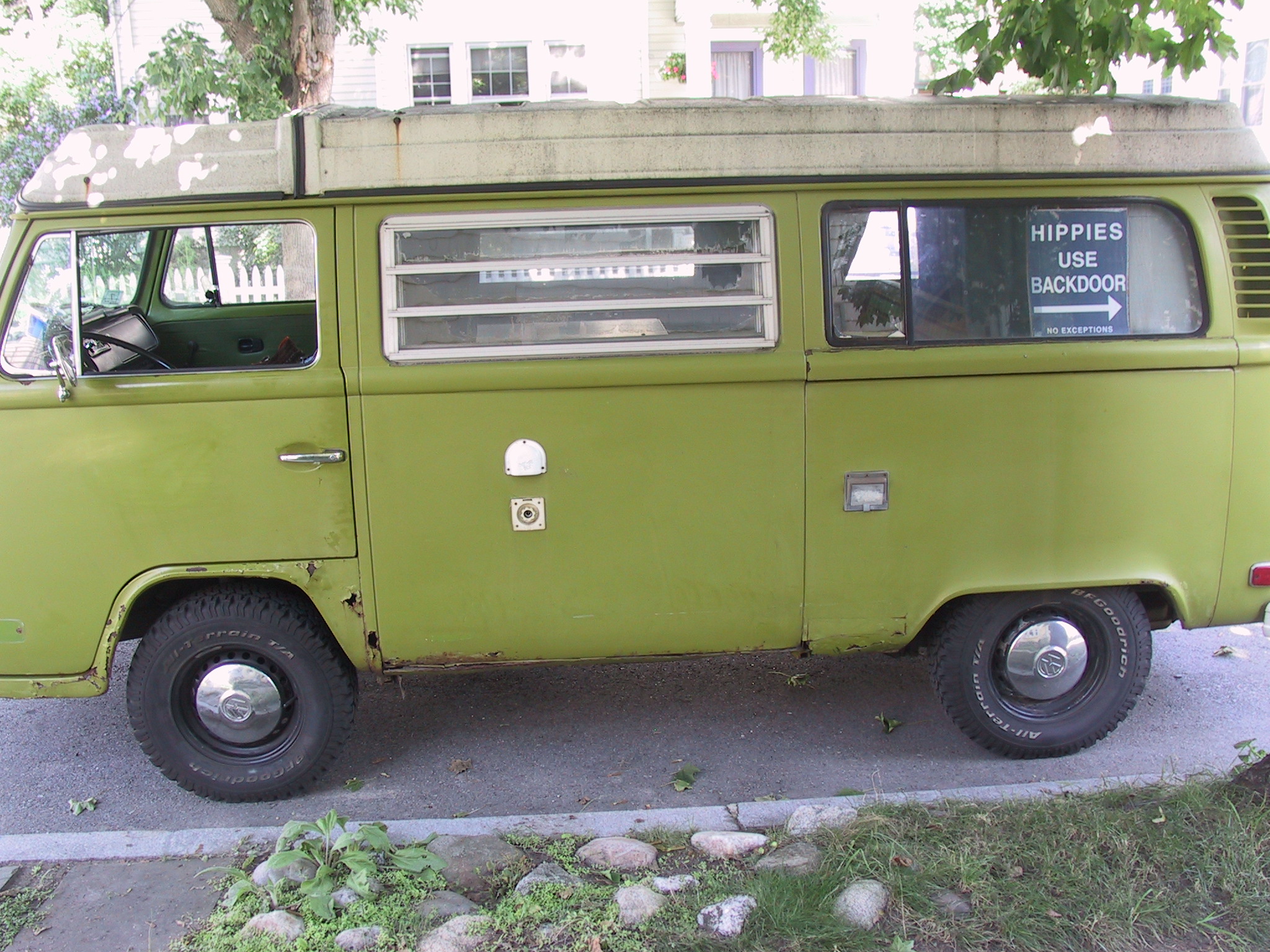
Punch buggy. (Or in this case, Punch bus.) Spring is here & so is the VW bus parked outside my house. (The sign in the window says: Hippies Use Backdoor.)

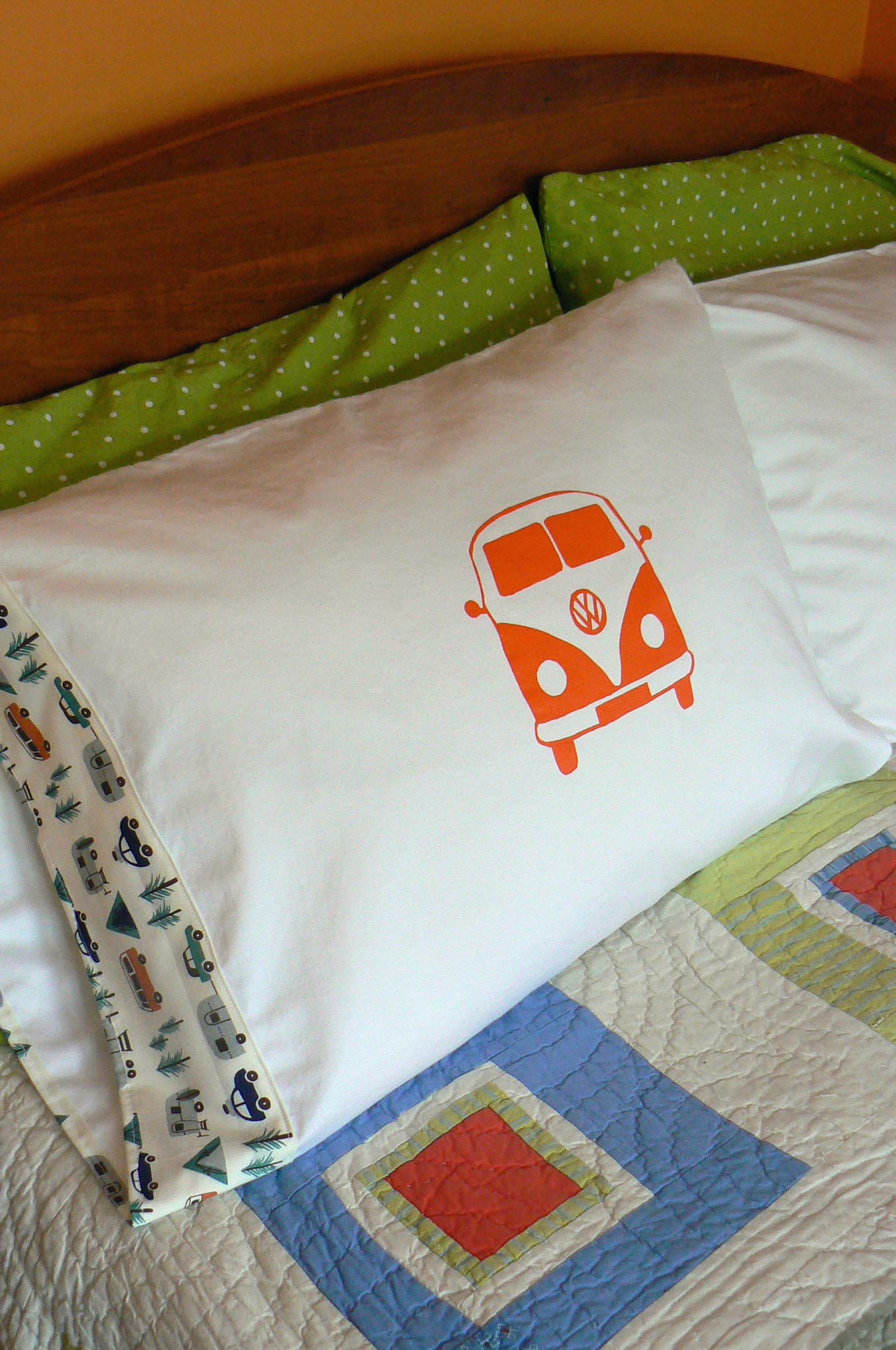
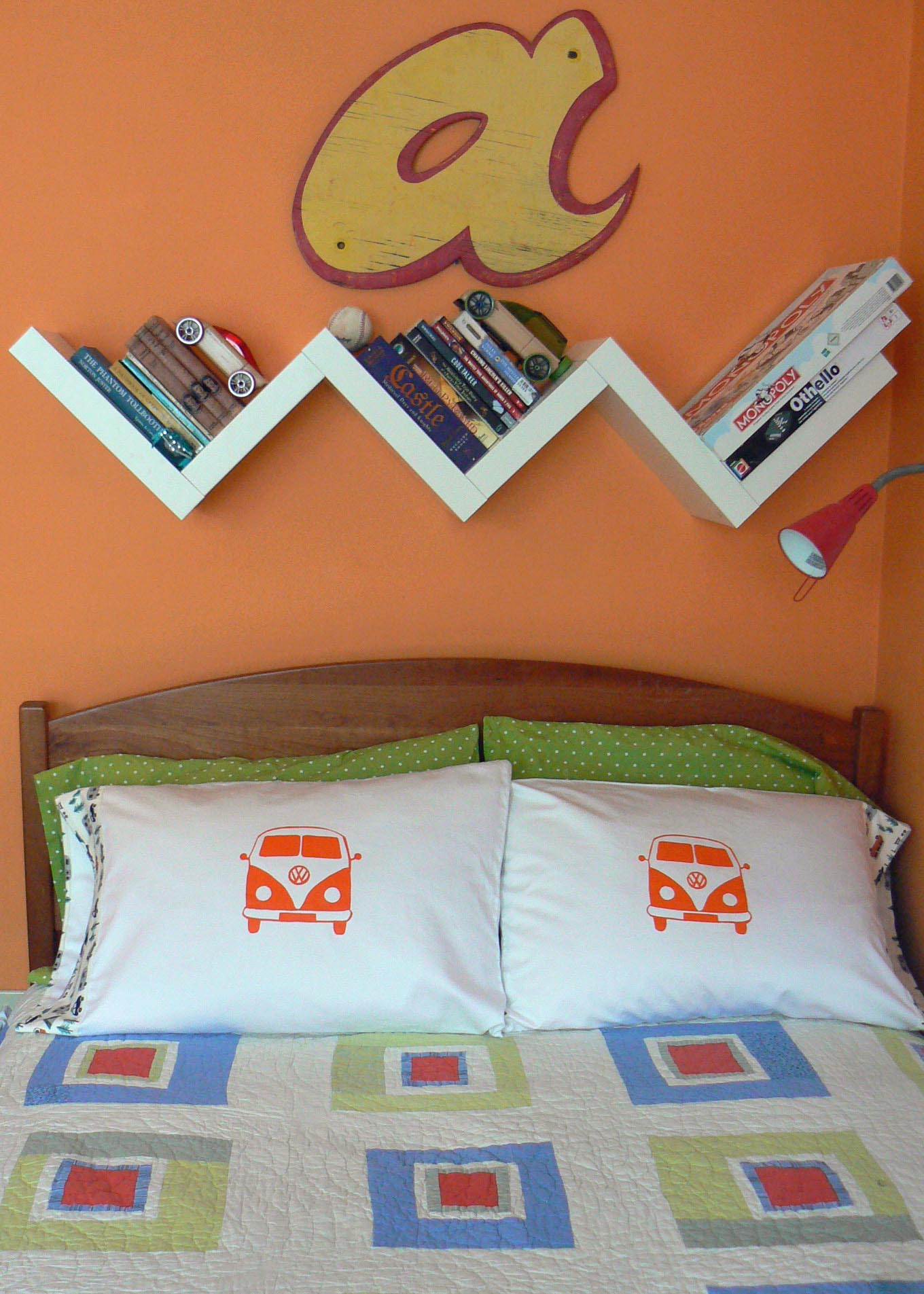
So in honor of the reappearance of spring and VW buses, I decided to give some old white pillowcases new life. Plus I wanted to make something for my 11-year-old who is easily embarrassed by T-shirts proclaiming anything, let alone T-shirts homemade by his mother, so I figured pillowcases were a safe zone, free from 5th grade peer review.

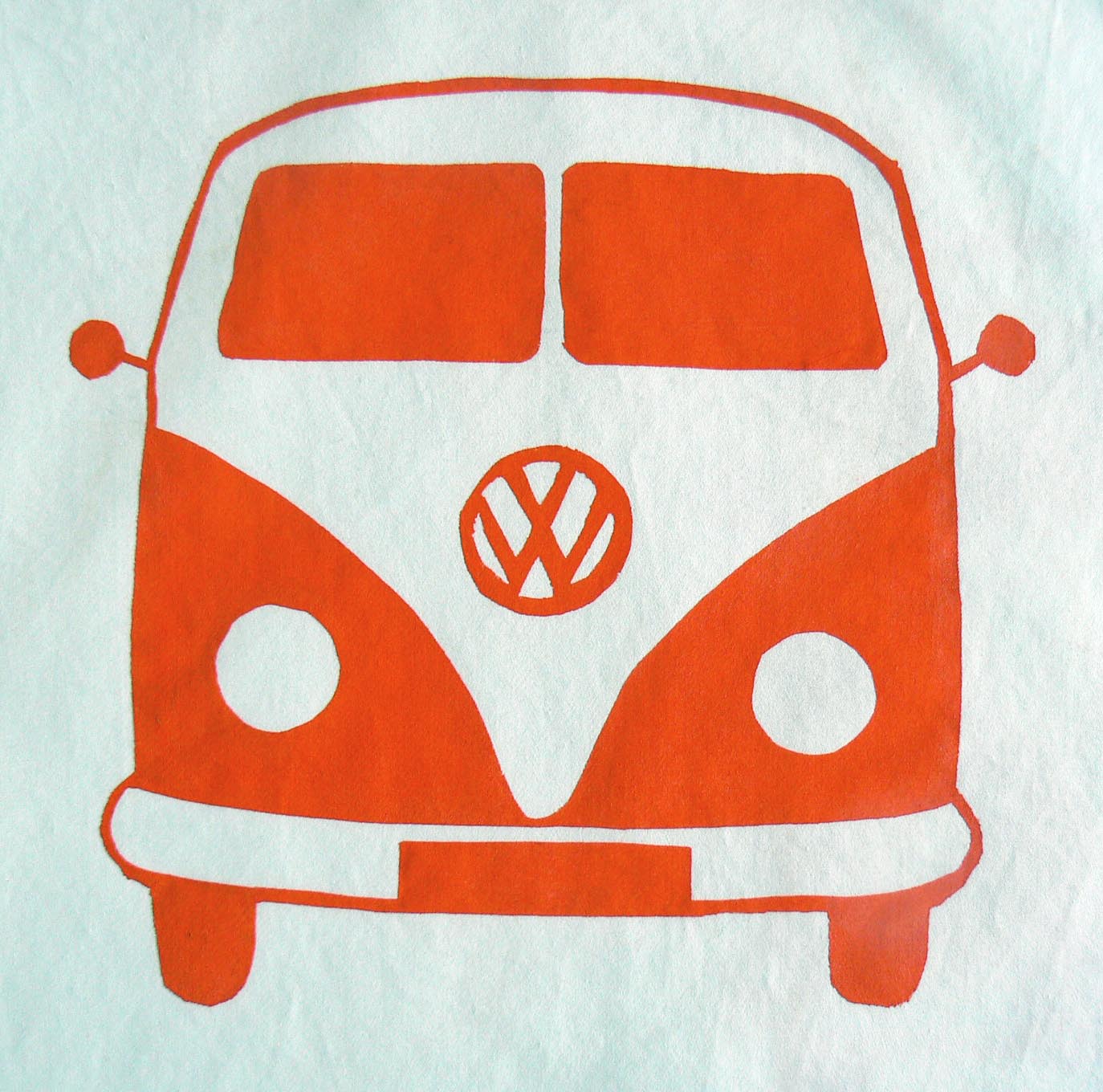
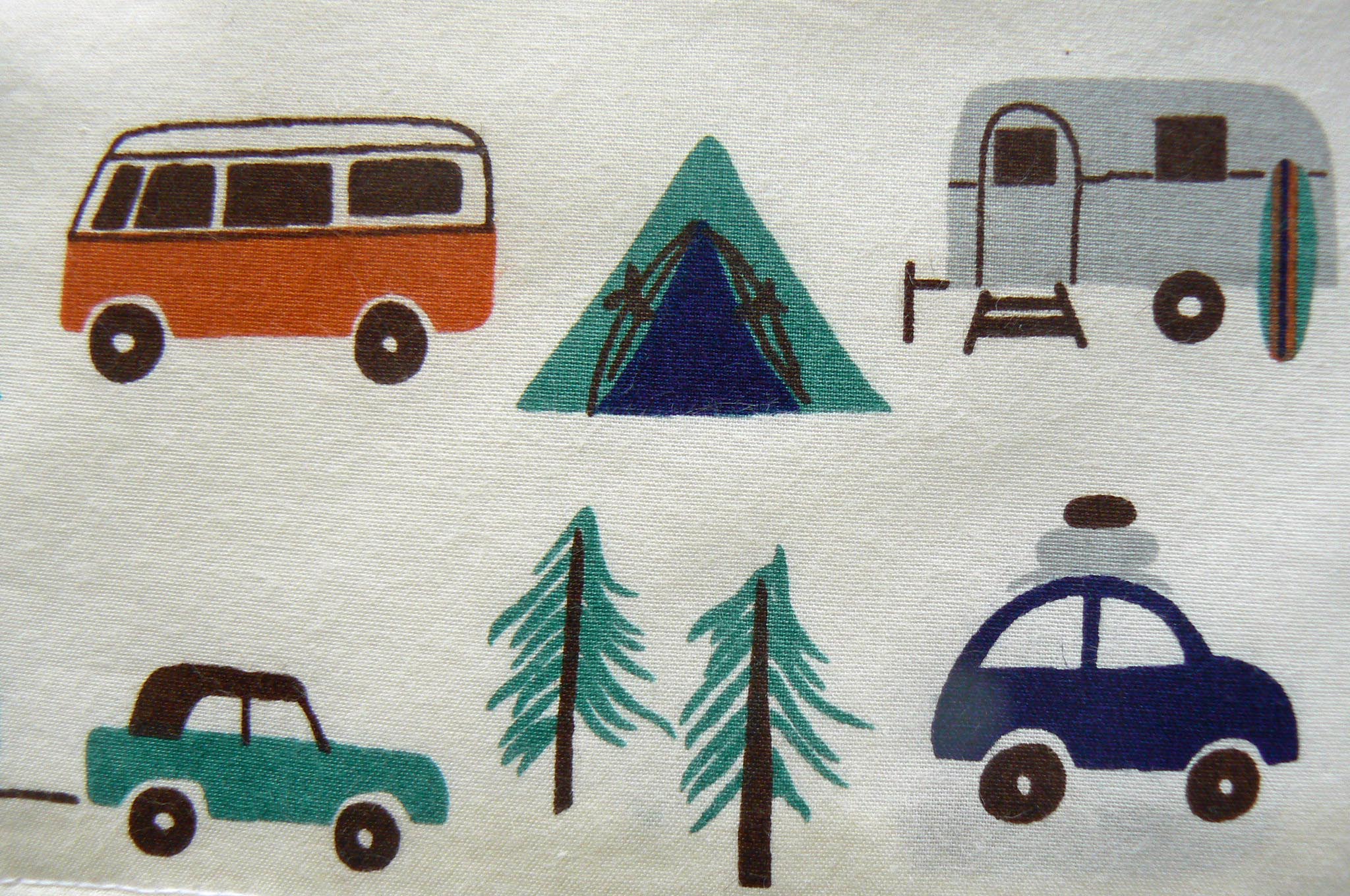
I cut a stencil on freezer paper from an image of a VW bus that I downloaded online. As I’ve mentioned before, freezer paper stencils are wicked easy & satisfying. Here is the complete how-to. To trim the pillowcases, I bought a half a yard of Happy Camper fabric from the Monaluna Circa 60 Beach Mod line for Birch Fabrics (available at Fabricworm). I should’ve bought a yard, but I was too cheap ($8.25 for half a yard!). It’s organic, alas.

 (The print is darker than how it appears on Fabricworm.)

No room for error. The pressure was on! I sewed the fabric directly onto the existing pillow trim (I split the seam for the trim–but not the rest of the pillowcase–to make it easier to sew). For the edge that you see on the outside of the pillowcase, I folded 1/4″ of the fabric, ironed, and sewed as close to the edge as I could. For the hem inside of the pillowcase, I folded 1/4″ over twice to completely encase the raw edge. Not sure if this is the best way to add trim, but it looks decent and adds a pleasing weight to the end of the pillow.

Freezer Paper Stencils: Robot Tees

Handsman, this silver-painted robot with the high-tech egg-carton control panel, was constructed by my five-year-old’s preschool classmates, who are studying robots this month.  Handsman looms at over 4′ (taller than your average preschooler) and sports zippy yellow rubber gloves–hence, his handy name.

[photo thanks to Pauline & Amanda!]

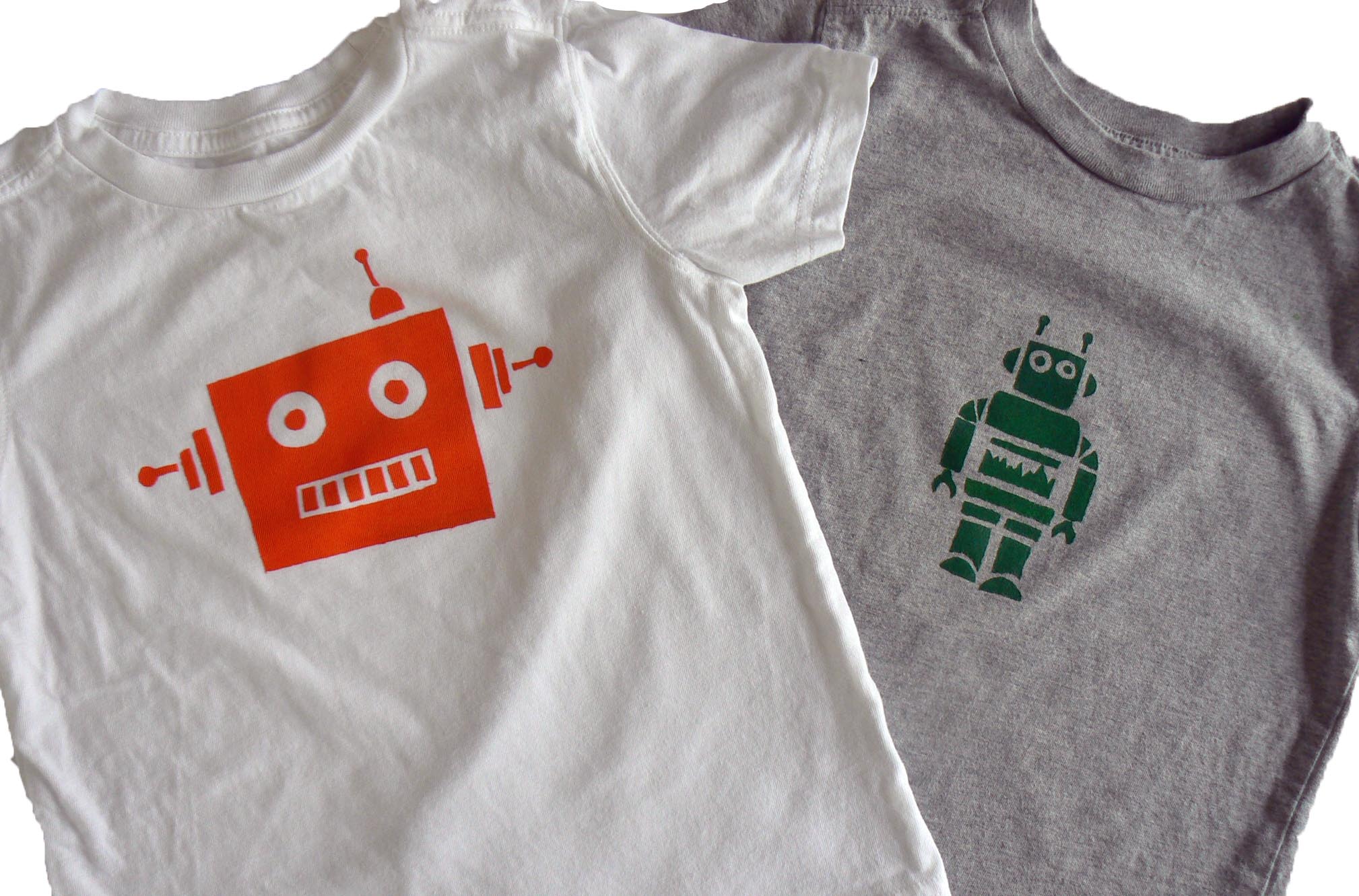
To show my full support for robot curriculum everywhere, I decided to make some robot tees for my little guy with freezer paper stencils. Freezer paper stencils have a high fun factor: big on reward, low on effort. Here is the complete how-to. If you fret about drawing your own robot stencil, then download an image, print, and trace. To avert laundry tragedies, don’t forget to heat-set the paint after it dries.

Robot tees!

DIY Cookbook

I’m an ambivalent cook, and not a very intuitive one. So when I come across a good recipe, I hold onto it for dear life. Over the years, I’ve collected a hodgepodge of scribbled sticky notes and magazine tear sheets with favorite recipes.

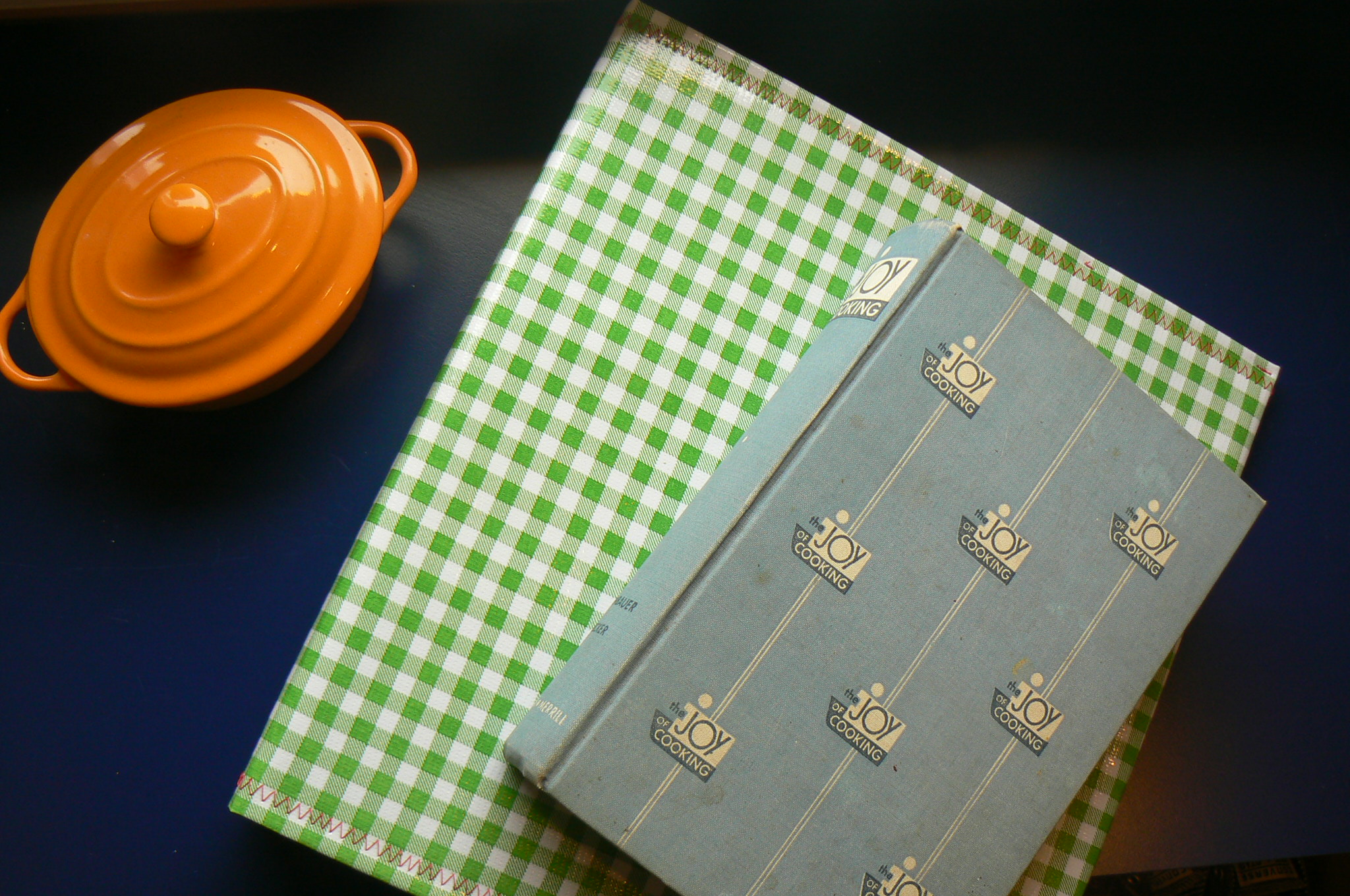
The mess needed a home. So, I ordered a Rebinder (which is a binder made from recycled corrugated cardboard) and a box of sheet protectors for my recipes. The Rebinder was terrific, but not so great at repelling cooking drips & spills.

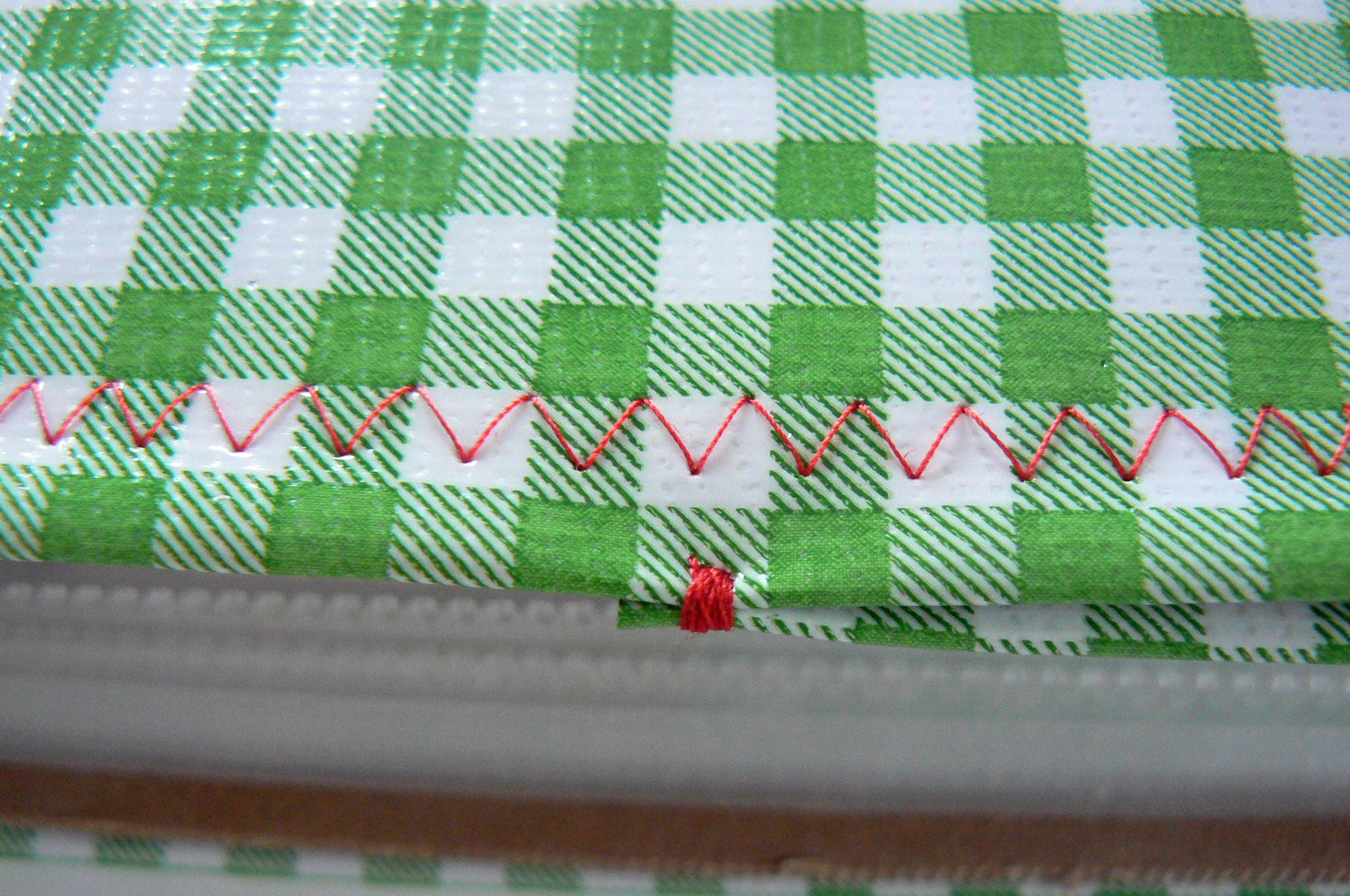
I bought a yard of green gingham oil cloth, and relying on my ancient memories of covering books in high school, I winged it. Here are my step-by-step instructions for making an oilcloth cover, written after the fact. I’m pleased with the results. I sewed the last steps while the cover was actually on the binder–it’s sewed on forever–which might be why it doesn’t buckle & lies nice and flat.

Pajamas recycled into soft blocks

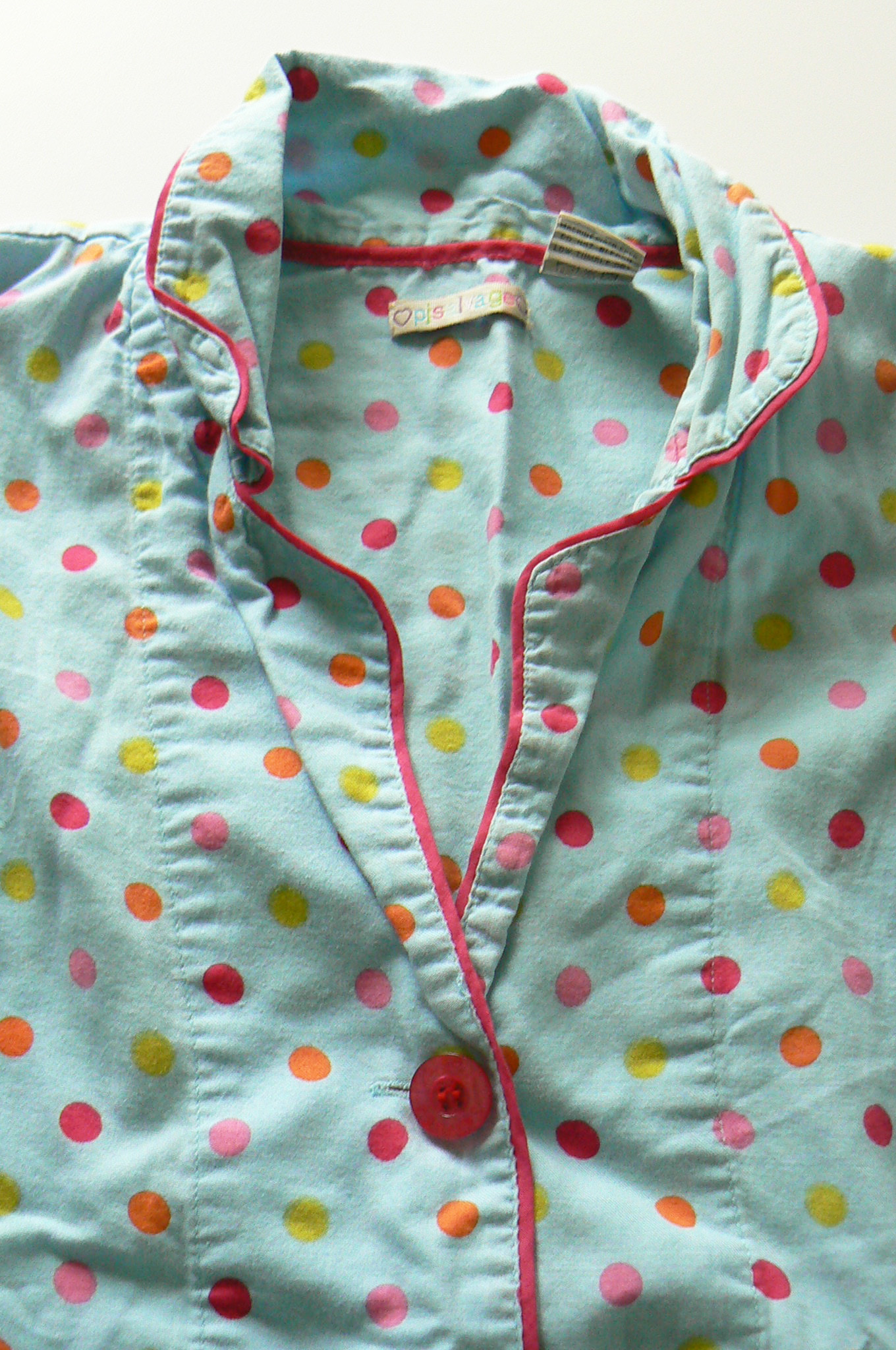
You may be able to throw away your old, favorite polka-dot p.j.s. Or use them as a dust rag. But I don’t have that kind of resolve. Plus, I don’t dust that often. So, I stashed them away.

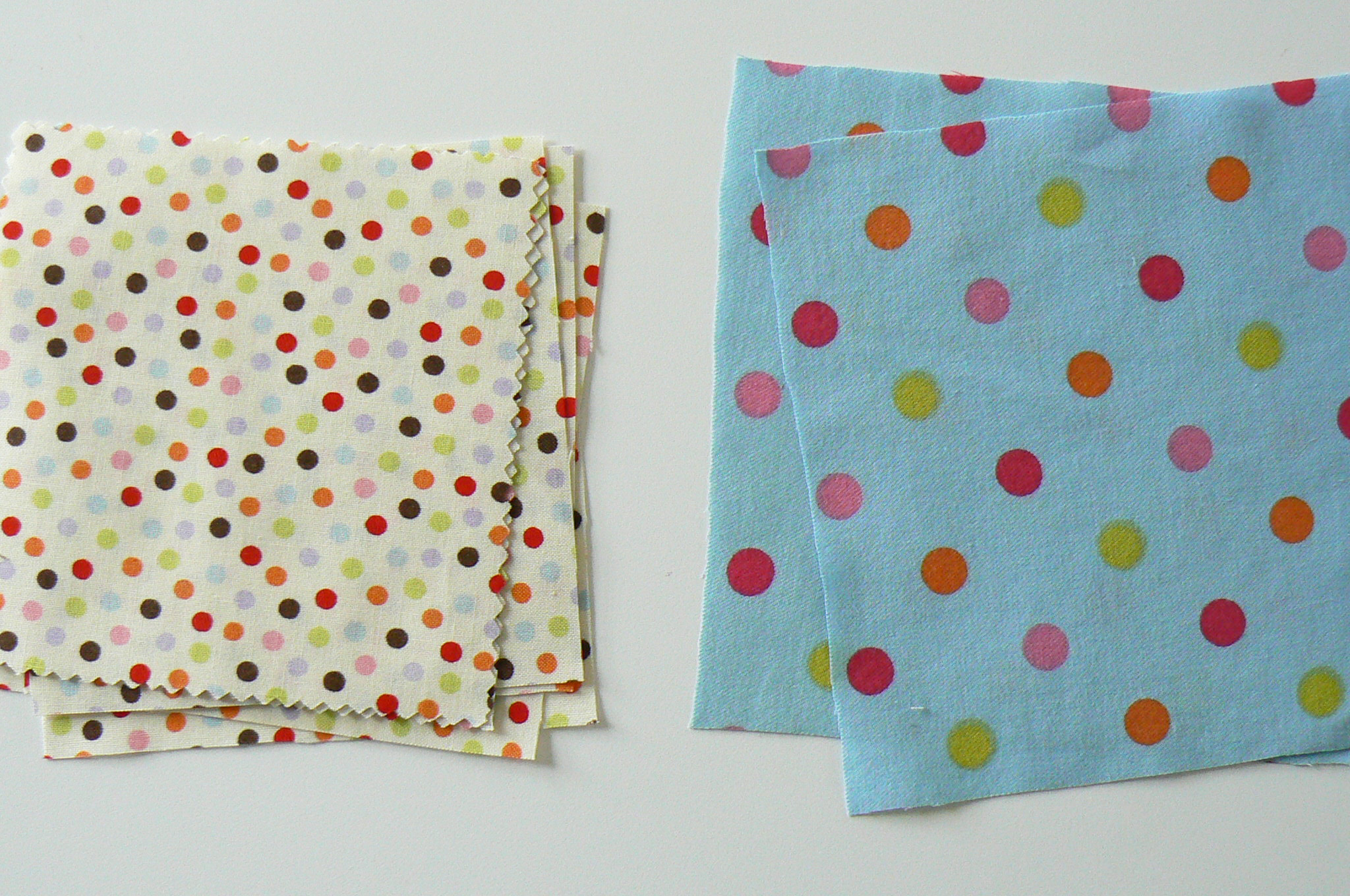
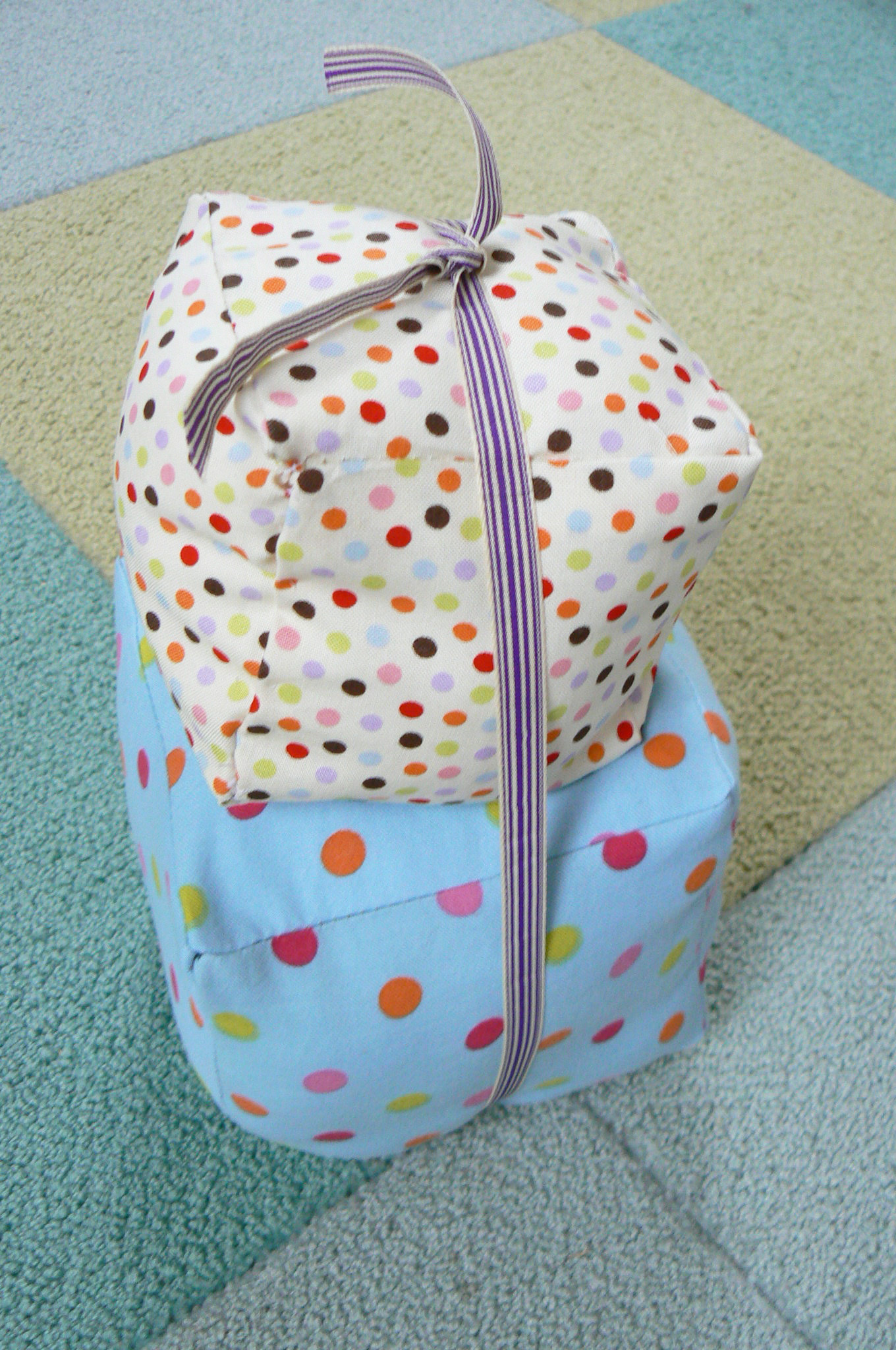
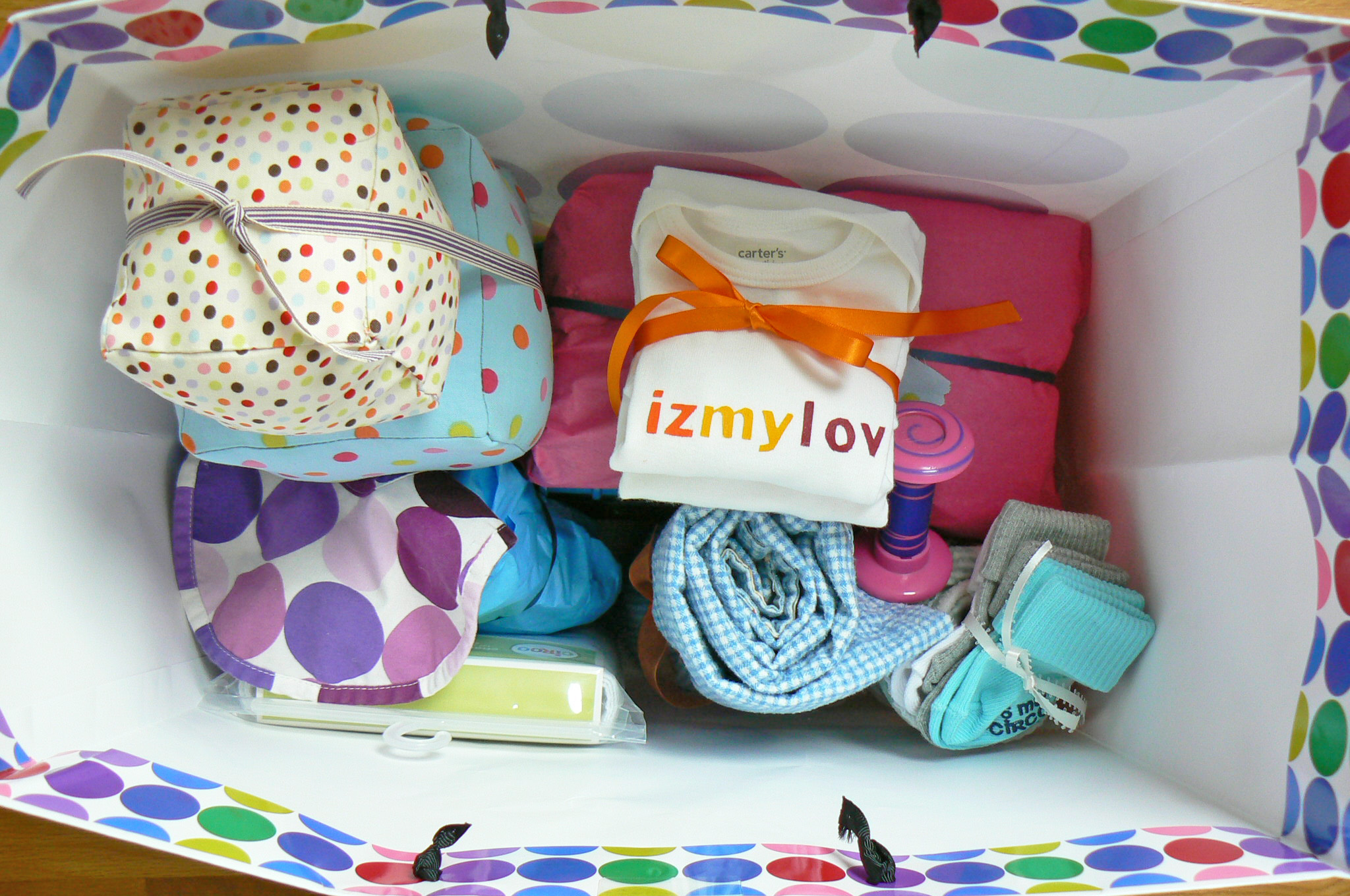
Conveniently, my friend Megan decided to get pregnant. Babies are the best excuse for making things that are not really useful but are pleasing. Like soft blocks. And old p.j.s offer the perfect fabric for them: cotton softened by sleep.

For complete instructions on how to make soft blocks, a downloadable pdf is available here: How to Make Soft Blocks

Here is the end result: chubby cotton blocks!